Pool deck guide
Pool Deck Resurfacing vs. Replacement: Should You Resurface or Replace?
Resurface or replace your pool deck? Learn what slab condition resurfacing needs, the red flags that call for replacement, and when a hybrid repair makes sense.
By the Pool Decks of Tampa crew · Published · 7 min read
Quick answers
- Resurfacing works when the slab underneath is structurally sound, reasonably level, and not actively moving.
- Replacement is the better call when sections have heaved, sunk, or broken loose, when the slab is undermined, or when the deck drains toward the house.
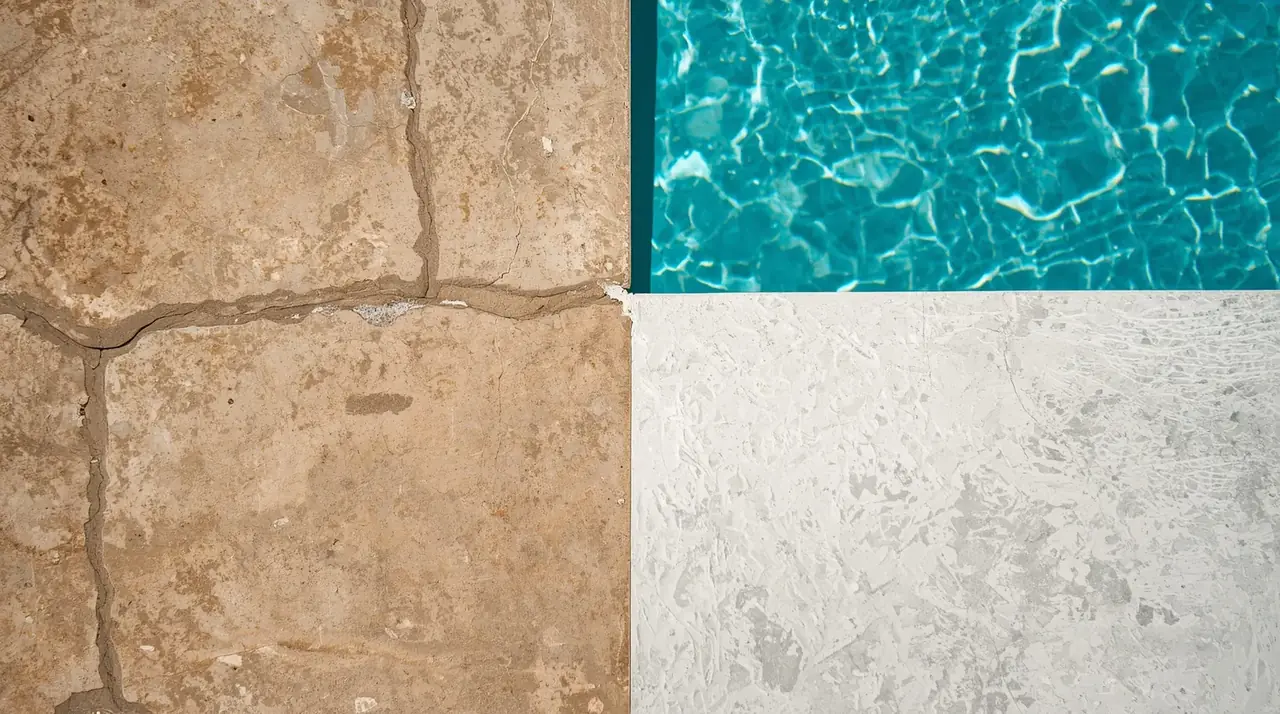
- Many Tampa Bay decks fall in between: replacing a few bad sections and then resurfacing the whole deck gives one uniform finish.
- An on-site inspection, not a photo alone, should make the final call on whether a slab can carry a new surface.
Should you resurface or replace your pool deck?
If the concrete slab under your pool deck is solid, reasonably level, and not moving, resurfacing is almost always the smarter choice. If sections have heaved, sunk, broken apart, or lost the soil underneath them, a new surface will not fix that, and those areas need to be replaced. Many decks need a bit of both.
The finish you see is only the top layer. A cool deck texture, overlay, or coating depends entirely on the slab below it. On an inspection, we work out whether that slab is a good foundation or a problem a new finish would only hide. Here is how we make that call for pool deck resurfacing in Tampa.
What condition does a slab need to be in for resurfacing?
A resurfacing system bonds to the existing concrete, so the concrete has to be able to hold it. On Tampa Bay decks, we look for a few things before we recommend a new finish.
- Structurally sound concrete: no large pieces rocking, crumbling, or sounding hollow across wide areas when tapped.
- Mostly level surfaces: small dips can be addressed in prep, but trip edges and sunken panels cannot be hidden under a thin layer.
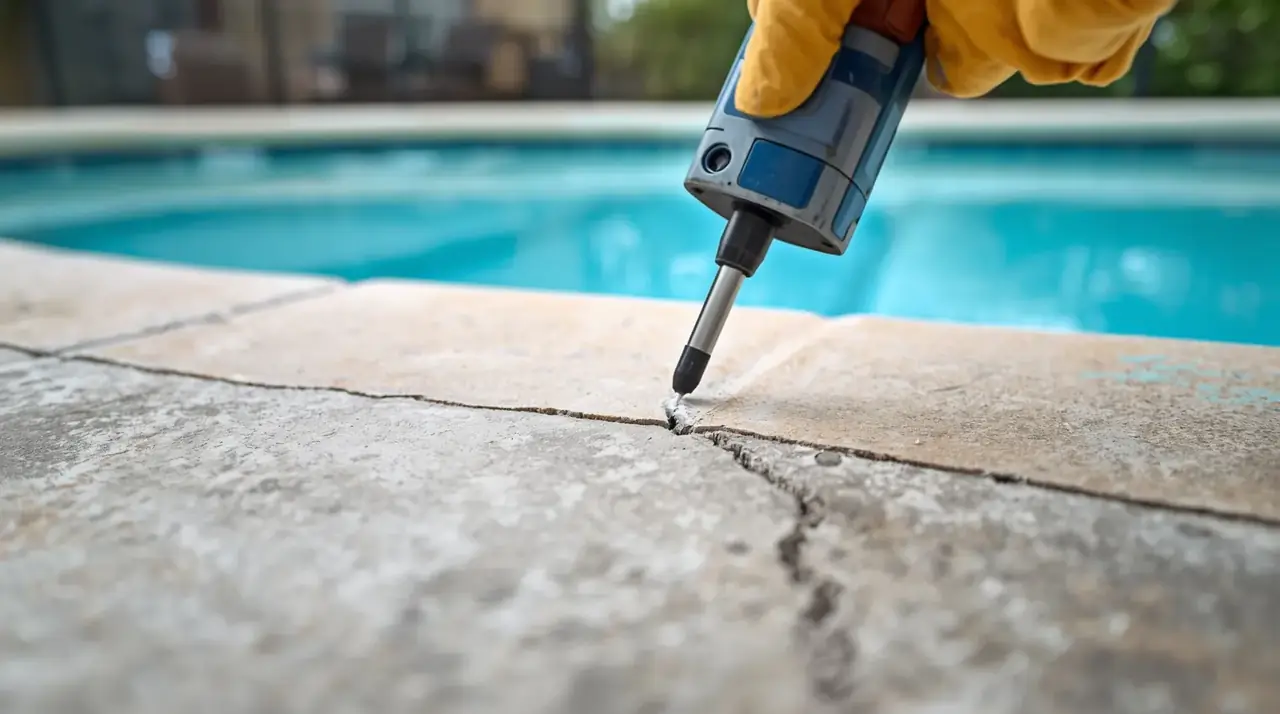
- Stable cracks: hairline and shrinkage cracks that are not getting wider can be routed and filled or stitched before the new surface goes down. See our pool deck crack repair guide for how we treat them.
- Water that flows away from the house and toward deck drains or the yard.
- An old finish that can be removed or properly prepared, whether that is peeling paint, failing sealer, or a worn cool deck layer.
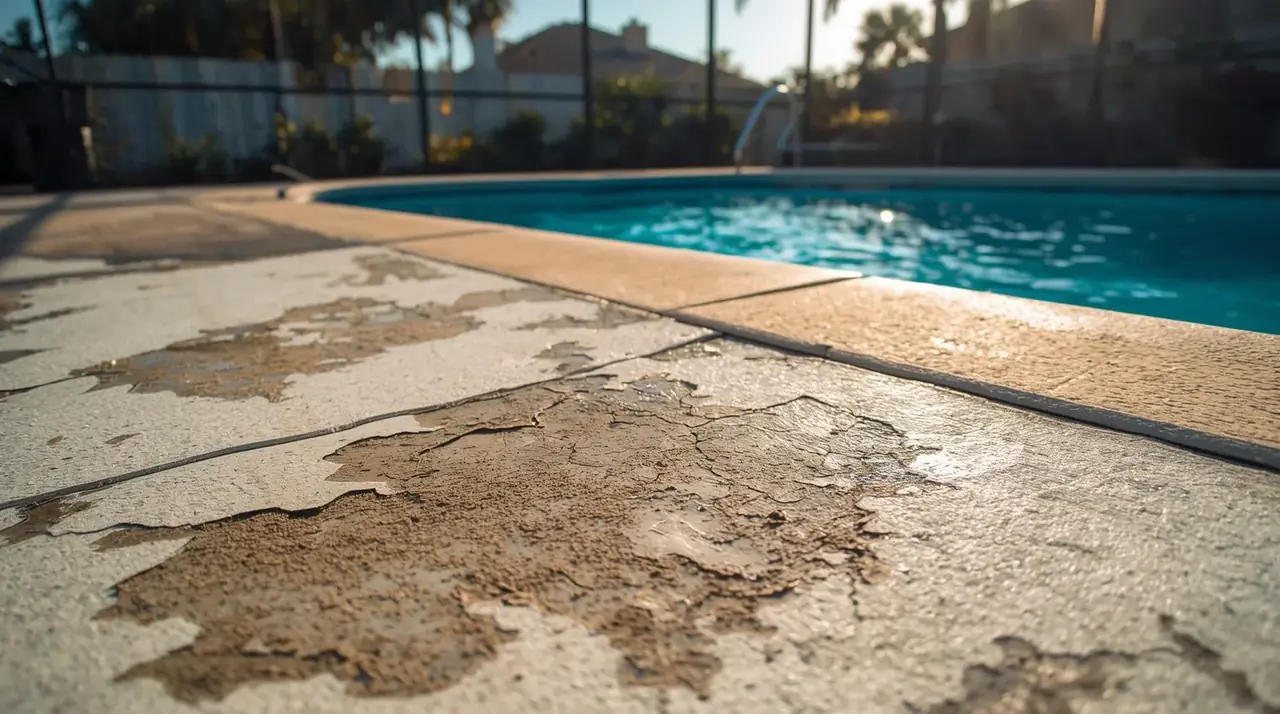
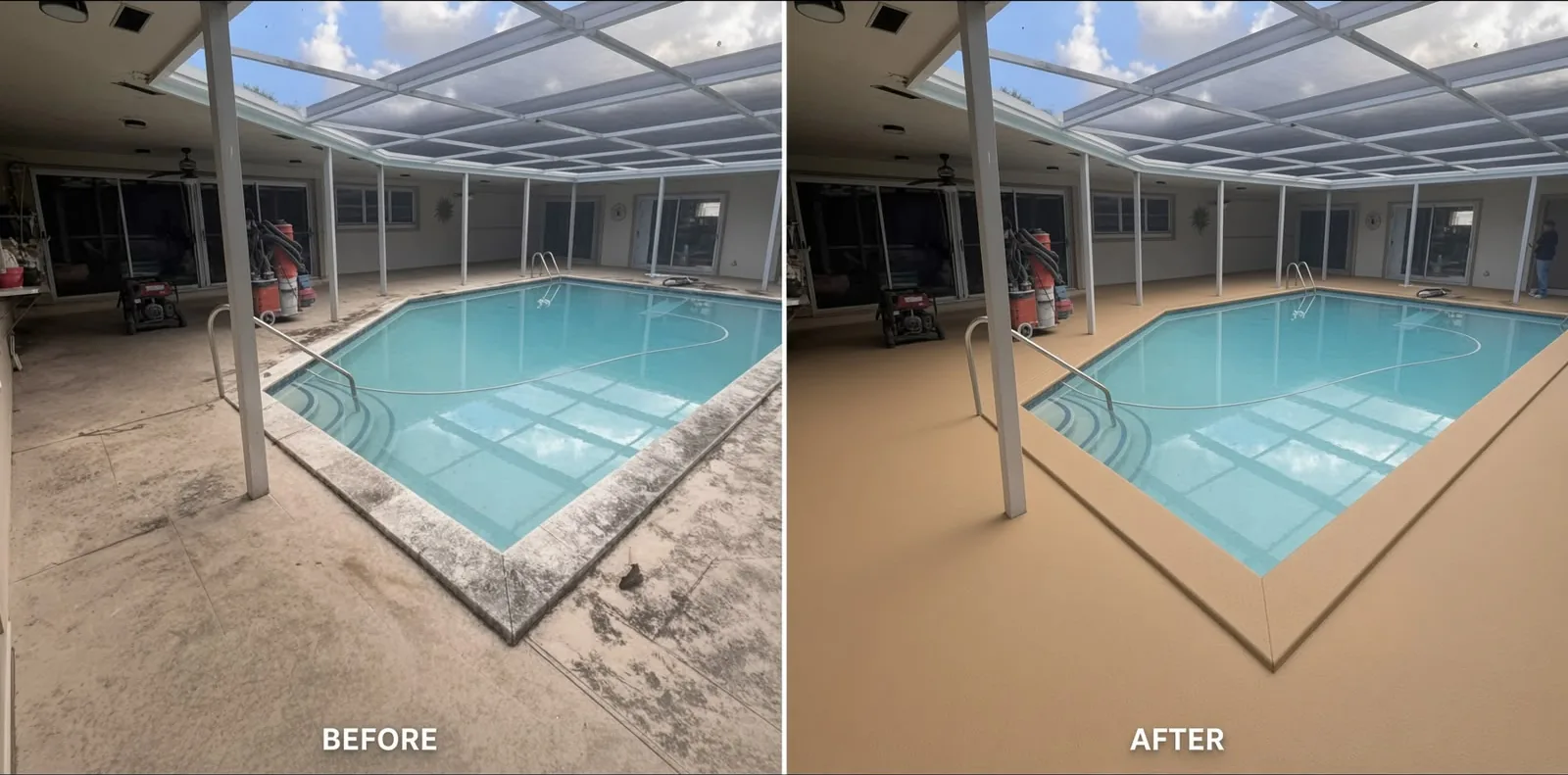
If your deck checks those boxes, the visible problems are mostly cosmetic or surface-level: faded color, mildew staining from our humid summers, worn texture, or a coating that is flaking. That is exactly what Tampa pool deck resurfacing is designed to solve, and it is the most common situation we see.
What are the red flags that mean replacement?
Some problems live in the slab or the soil, not the surface. When we see these, we tell homeowners plainly that a new finish is not the answer for that area.
- Heaving: sections pushed up by roots or soil movement, leaving raised edges that keep growing.
- Widespread settlement: large areas that have sunk, often from washed-out fill or the sandy soils common across Florida.
- Large displaced sections: panels that have shifted sideways or vertically so the deck no longer forms one plane.
- Broken or undermined slab: concrete that is cracked through and hollow underneath, sometimes with visible voids at the pool edge or along drains.
- Drainage toward the house: if the deck slopes back toward your home or lanai door, surface work will not correct the pitch, and summer storm water will keep heading the wrong way.
Why covering these problems fails
A resurfacing layer moves with the concrete under it. If the slab keeps settling or lifting, the new finish will crack along the same lines, sometimes within a season of hurricane-season rain. Paying for a finish over a moving slab usually means paying twice.
How do cost, time, and disruption compare?
Resurfacing keeps the existing slab, so there is no demolition, no hauling of broken concrete, and no new pour. That generally makes it faster, quieter, and less expensive. Typical residential resurfacing jobs take us 2 to 5 days depending on scope, and the yard is not torn up in the process.
Replacement is a bigger project. It means breaking out concrete, correcting the base and slope, forming and pouring new slab, and letting it cure before any finish goes on. It often means working around screen enclosure posts and tight side-yard access. It also leaves you with bare concrete that will usually still need a finish.
For resurfacing, our online estimator starts at about $3 per square foot for restoration (structural repair, crack stitching, and full resurface) and about $6.50 per square foot for a retexture over a sound surface. Those are starting points; the final price depends on inspection. For a deeper breakdown, read what pool deck resurfacing costs in Tampa.
Can you replace part of a pool deck and resurface the rest?
Yes, and on many older Tampa Bay decks this is the most practical answer. A deck might be sound across most of its area but have one sunken corner by a downspout, a heaved panel near a tree, or a broken section where the pool equipment pad meets the deck.
In a hybrid job, the failed sections are cut out and replaced, the remaining slab is repaired where needed, and then the entire deck gets one resurfacing system. The new finish ties the old and new concrete together visually, so you do not end up with a patchwork of mismatched gray.
The trade-off is that the new concrete needs time to cure before it can be resurfaced, which adds days to the schedule.
What about the pool coping?
Coping is the cap along the edge of the pool, and it often decides how a deck project goes. Whether you resurface or replace, the joint between the deck and the coping needs attention. That joint should be a flexible expansion joint sealed with a polyurethane-type sealant, not hard grout or a finish run straight over it.
If the coping stones are loose, cracked, or tilted, they may need to be reset as part of the project. If you plan to resurface the pool interior soon, talk through timing, since finishing the deck up to coping that is about to be replaced can mean redoing the edge.
How do you know which one your deck needs?
Start with a simple walk-around. Look for raised or sunken edges you could trip on, cracks wider than a coin edge or that have one side higher than the other, hollow sounds when tapping with a broom handle, and puddles that sit after a summer afternoon storm. Check where water goes near the house and lanai doors.
Stains, fading, worn texture, or small cracks usually mean a resurfacing candidate. Our guide on the signs your pool deck needs resurfacing covers those in more detail. If you see the red flags above in one or two spots, a hybrid is worth asking about. If they are everywhere, replacement may be the honest answer.
Photos give us an early read, but movement and slope are best judged in person, so we do a free on-site inspection first.
Get a straight answer on your deck
We would rather tell you a section needs replacing than sell you a finish that will crack along the same lines next summer. Our pool deck restoration service covers structural repair, crack stitching, and full resurfacing for decks that are worth saving.
If you are weighing your options for resurfacing a pool deck in Tampa Bay, send us photos for a free estimate or call (813) 553-5620. We serve Hillsborough, Pinellas, Pasco, and Manatee counties, and you can learn more about our pool deck resurfacing services on the homepage.
Frequently asked questions
›Can you resurface a cracked pool deck?
Usually, yes, if the cracks are stable. Hairline and shrinkage cracks can be routed and filled, injected, or stitched before the new surface goes down. Cracks that keep widening or have one side higher than the other point to slab movement, and those areas may need repair or replacement first so the new finish does not crack along the same line.
›Is resurfacing cheaper than replacing a pool deck?
In most cases it is, because it skips demolition, hauling, and pouring new concrete. Our online estimator starts at about $3 per square foot for restoration and about $6.50 per square foot for a retexture over a sound surface, with the final price set after inspection. Replacement also usually leaves bare concrete that still needs a finish.
›Can a sunken section of pool deck be fixed without replacing the whole deck?
Often, yes. A sunken or heaved section can be cut out and replaced on its own, then the whole deck can be resurfaced so the old and new concrete match. The new concrete needs time to cure before resurfacing, so the schedule runs longer than a resurfacing-only job.
›Will resurfacing fix drainage problems on my pool deck?
Not if the slab itself slopes toward the house. A resurfacing layer follows the shape of the concrete under it, so it cannot meaningfully change the pitch. Small low spots can sometimes be improved during prep, but a deck that sends water toward your home typically needs those sections replaced or drainage added.
›How long does pool deck resurfacing take compared to replacement?
Typical residential resurfacing jobs take about 2 to 5 days depending on scope and weather. Replacement takes longer because of demolition, base work, pouring, and curing time before a finish can be applied.
About Pool Decks of Tampa
We are a family-owned crew that resurfaces, repairs, and restores pool decks across Hillsborough, Pinellas, and Pasco counties. We are a State Certified Specialty Contractor, licensed and insured, and every deck restoration comes with a written warranty. These guides come from the questions homeowners ask us during inspections. See our pool deck resurfacing work in Tampa, read customer reviews, or verify any Florida contractor license.