Pool deck guide
Pool Deck Crack Repair: What Works and When Is a Crack Serious?
How Tampa Bay pool deck cracks get repaired: hairline vs structural cracks, coping joints, why caulk fails, and when cracks mean resurfacing or replacement.
By the Pool Decks of Tampa crew · Published · 7 min read
Quick answers
- Most pool deck cracks are shrinkage cracks that can be repaired and covered, but cracks with height difference, widening, or hollow-sounding edges need a closer look first.
- Surface caulk alone usually fails because it does not stabilize the crack or move with the slab, so the line reappears in the finish within a season or two.
- Cracks are typically repaired by routing and filling, stitching across the crack, or injecting it, and the gap at the coping should get a flexible polyurethane sealant, not rigid filler.
- A repaired crack can usually be blended into a new resurfaced finish, but an active crack may still telegraph back through any coating.
- Widespread settlement, heaving, or broken slab sections usually point to partial replacement rather than another round of crack repair.
What is the right way to repair a pool deck crack?
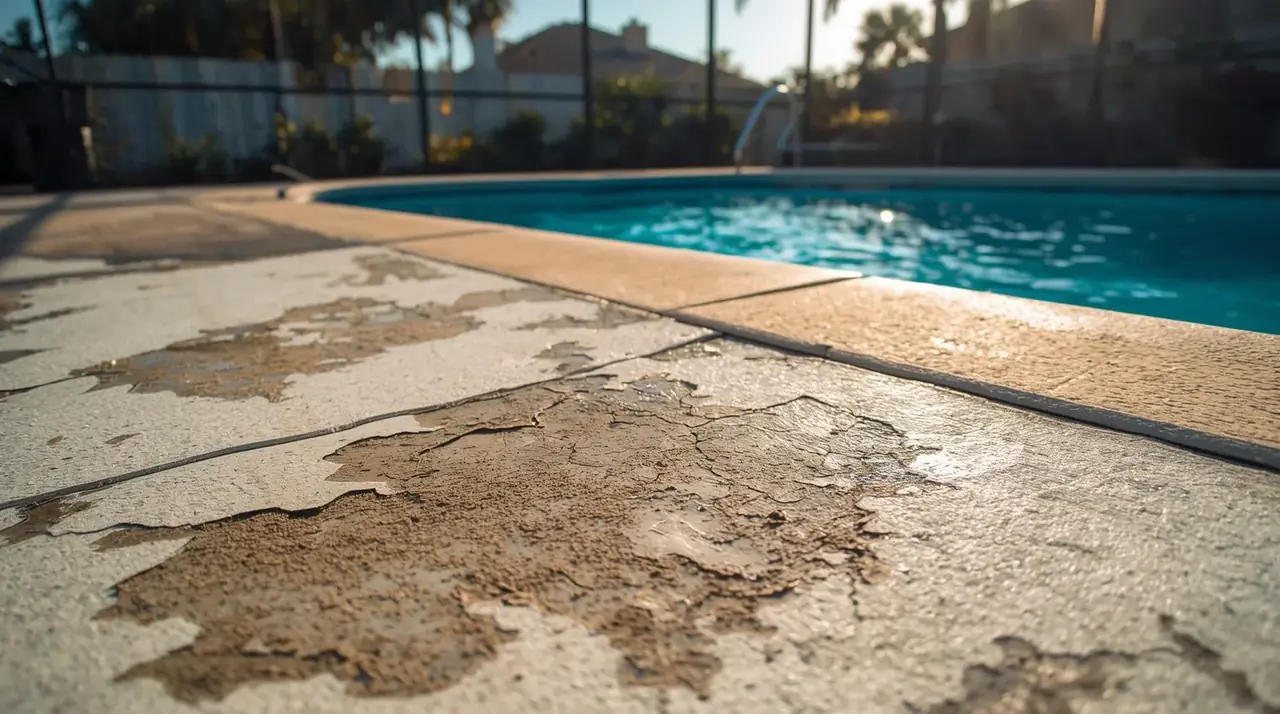
The right repair depends on why the crack formed and whether it is still moving. A stable hairline crack can be cleaned, opened, filled, and covered with a new finish. A crack that is widening, lifting, or sitting next to a hollow area needs the underlying cause addressed before any cosmetic work.
On Tampa Bay decks we usually see a mix of both: harmless shrinkage cracks across the field of the deck and a few problem spots near the coping, downspouts, or screen-enclosure posts. Good crack repair is the first step of most pool deck resurfacing in Tampa projects, because no finish lasts long over a crack that was never stabilized.
How can you tell a hairline crack from a structural crack?
When we inspect a deck, we check each crack against a few simple questions. You can do the same with a coin and a flashlight.
- Width: a crack you can barely catch with a fingernail is usually cosmetic. A gap you can slide a coin into deserves attention.
- Height difference: if one side of the crack sits higher than the other, the slab has moved. That is a settlement or heaving sign, not just shrinkage.
- Change over time: mark the ends of a crack with a pencil. If it grows past the marks over a few months, it is active.
- Sound: tap around the crack with a screwdriver handle. A dull, hollow sound means the topping or old coating has lost its bond.
What causes pool deck cracks in Tampa Bay?
Concrete shrinks as it cures, and if control joints were missing or placed too far apart, the slab picks its own crack lines. Those cracks are often old and stable.
Sandy soils are the next factor. When summer thunderstorms dump water off a roof or screen enclosure onto one corner of the deck, the sand underneath can wash out or compact, and that section settles. Tree roots and plumbing leaks under the deck can do the same, and daily heat cycling slowly works existing cracks wider.
Why do cracks form at the coping and expansion joint?
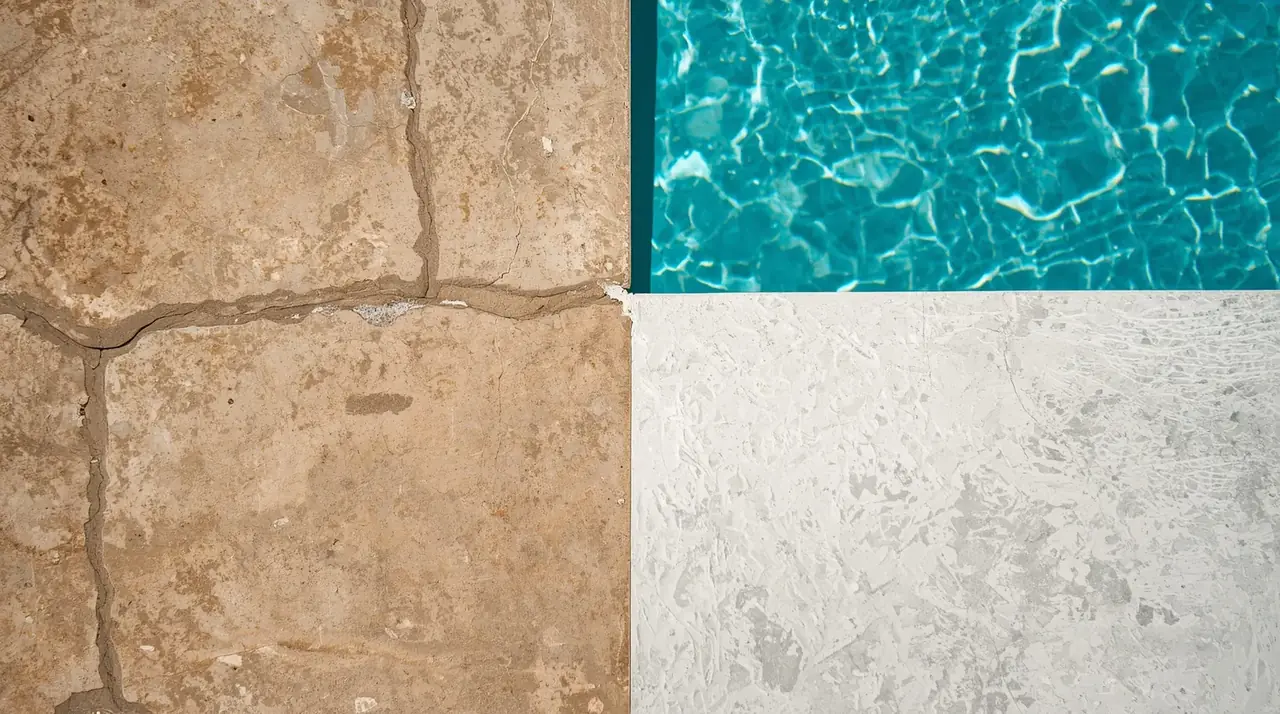
The pool shell and the deck are separate structures that move differently. The shell is heavy and fixed in place, while the deck floats on the soil and expands in the sun. A properly built deck has an expansion joint between the coping and the deck so the two can move without pushing against each other.
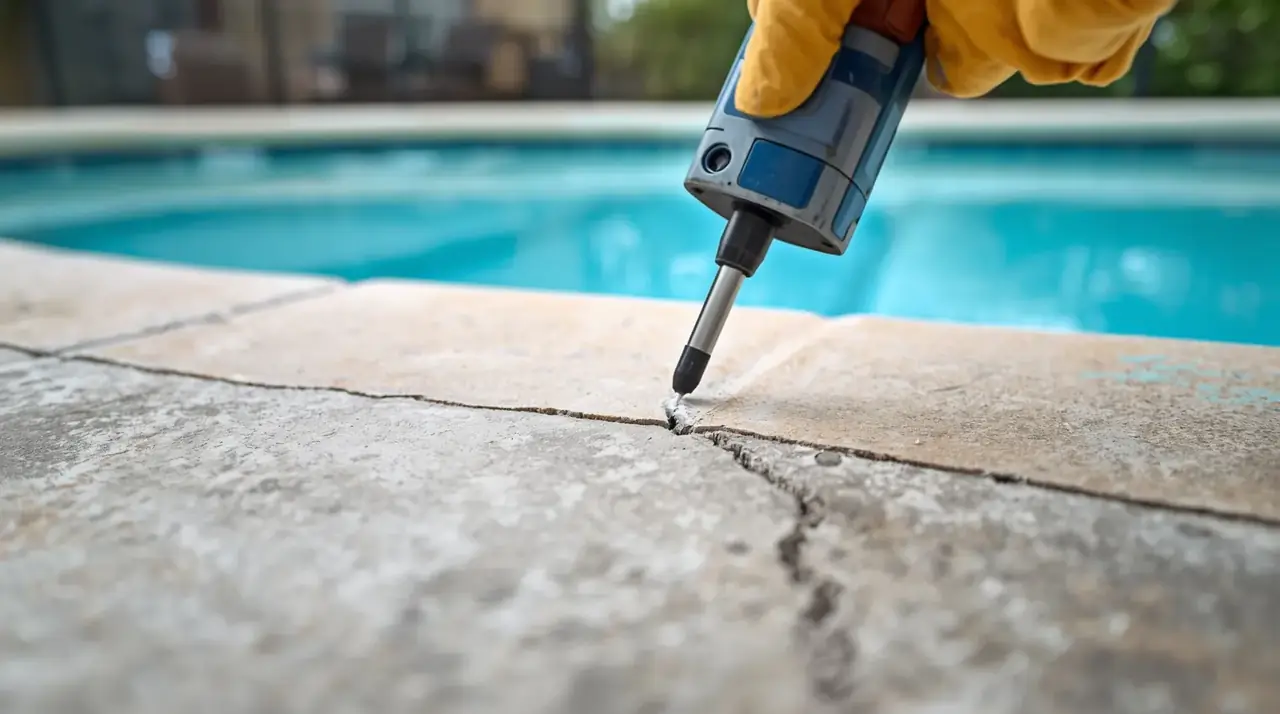
When that joint was filled with grout, covered over by an earlier coating, or never sealed, the deck pushes on the coping as it expands. The result is cracked or loose coping stones, a crack running parallel to the pool edge, and water getting under the deck. The repair is to cut the joint open, clean it out, install a backer rod where needed, and fill it with a flexible polyurethane sealant that can stretch and compress.
What we check first on an inspection
We walk the coping line first. A failed expansion joint is one of the most common reasons a resurfaced deck cracks again, and it is often the cheapest part of the job to do right.
Why does surface caulk alone fail?
Caulk is the most common DIY fix, and it rarely holds. Caulk sitting on the surface has very little to grip, it does not reach the full depth of the crack, and it shrinks and hardens under Florida sun.
Coating over a caulked crack has the same problem: the crack is still moving, so it shows through or splits the new finish. Flexible sealant belongs in joints designed to move, not in the field of the deck.
How are pool deck cracks repaired?
Professional pool deck crack repair usually uses one or more of these methods, chosen crack by crack:
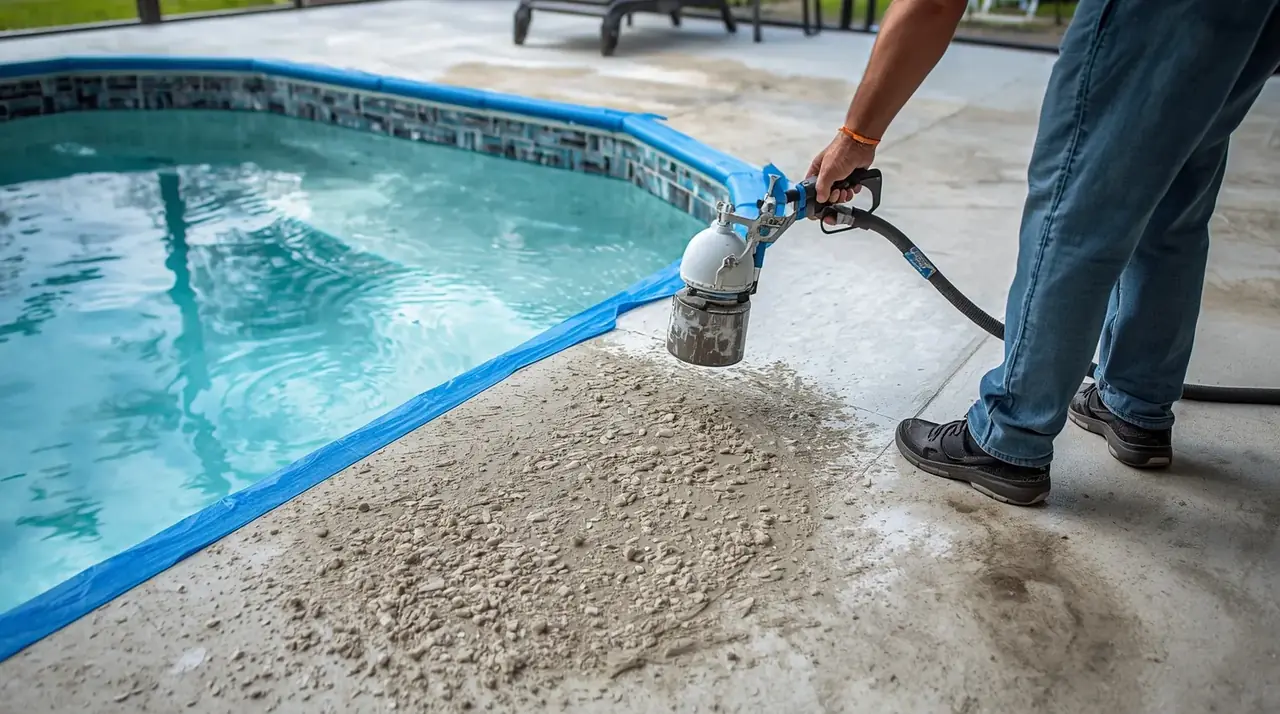
- Route and fill: the crack is ground open into a clean channel so filler can bond to sound concrete, then filled with a repair compound and leveled flush.
- Crack stitching: for cracks that have shown movement, cuts are made across the crack and steel stitching pins or staples are set in epoxy to tie both sides together.
- Epoxy crack injection: resin pushed into the full depth of a structural crack. It suits thicker, stable concrete more than thin, moving deck slabs.
- Joint sealing: control and expansion joints are cleaned out and sealed with polyurethane sealant so they can keep doing their job.
- Patch and level: hollow or delaminated areas around the crack are cut out and rebuilt with a polymer-modified cementitious patch.
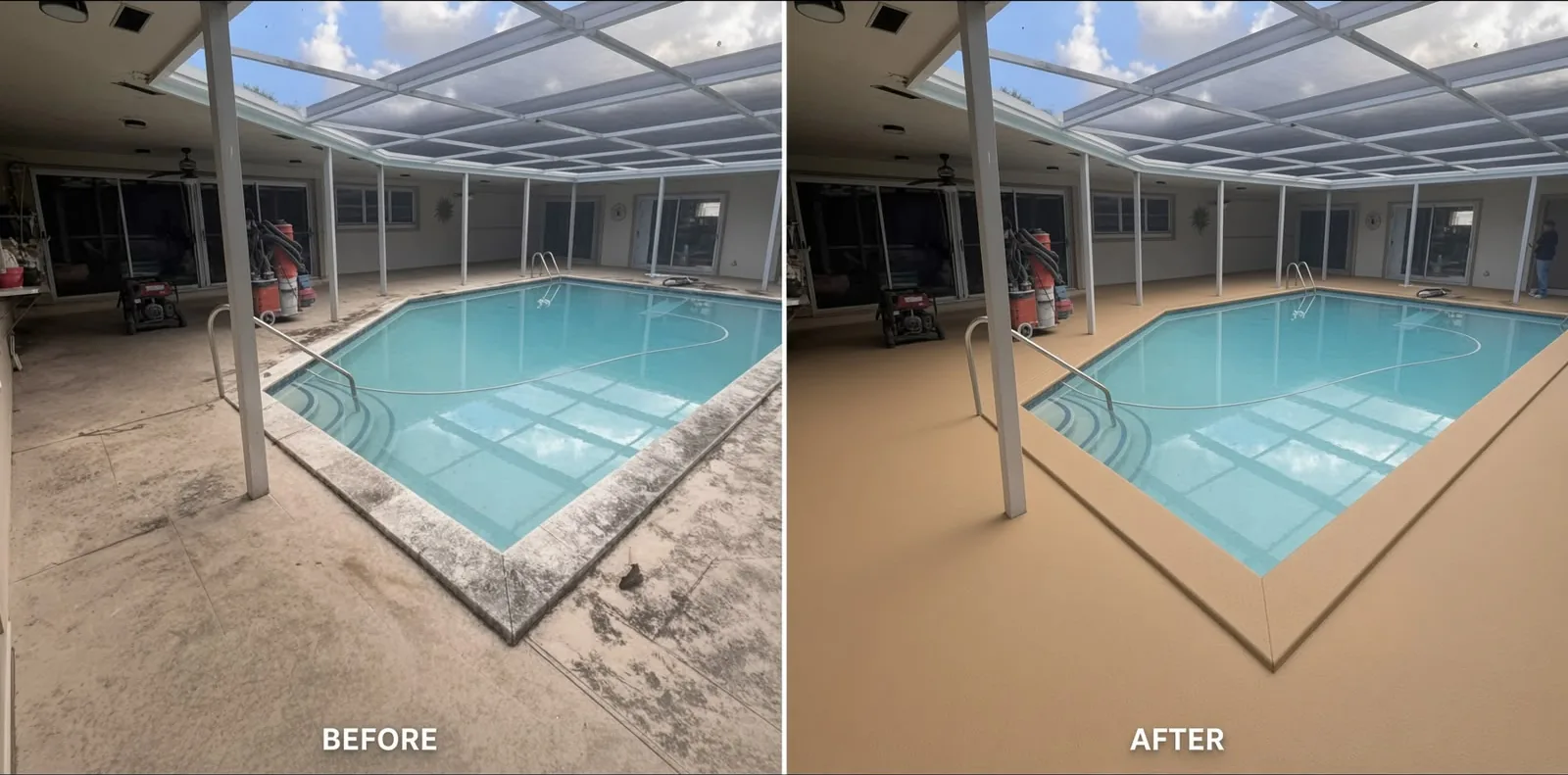
Repair alone leaves visible patches, which is why crack stitching and structural repair are built into our pool deck restoration scope.
When do cracks mean resurfacing or replacement?
A handful of stable cracks on a solid slab is a repair-and-resurface job, and it is the most common reason people call us about resurfacing a pool deck in Tampa Bay. It is far less disruptive than demolition. Our online estimator starts restoration with structural repair, crack stitching, and a full resurface at about $3 per square foot, and the final price depends on what the inspection finds.
Replacement is the better answer when sections of the slab have sunk or heaved enough to create trip edges, when cracks keep growing after repair, when the slab has tilted toward the house, or when large areas sound hollow. In those cases, coating over the problem only delays it. Our guide on pool deck resurfacing vs. replacement walks through that decision in more detail.
How do you get pool deck crack repair in Tampa Bay?
Pool Decks of Tampa is a family-owned, State Certified Specialty Contractor, licensed and insured, serving Hillsborough, Pinellas, Pasco, and Manatee counties, including Tampa, St. Petersburg, Clearwater, Brandon, Wesley Chapel, Riverview, Lakewood Ranch, and Safety Harbor. You can verify any Florida contractor license on the DBPR license search.
Start by sending photos for a free estimate: one wide shot of the whole deck, close-ups of the worst cracks with a coin for scale, and the coping line. We follow up with a free on-site inspection, and most residential jobs take 2 to 5 days depending on scope. Every deck restoration includes a written warranty. You can also see the full range of our pool deck resurfacing services or call (813) 553-5620.
Frequently asked questions
›Are hairline cracks in a pool deck a problem?
Most hairline cracks are shrinkage cracks and are not a structural concern. They do let water into the slab and collect dirt and mildew, and they tend to widen slowly with daily heat cycling. If there is no height difference and no hollow sound around them, they can usually be filled and covered during resurfacing rather than repaired urgently.
›Can I fix pool deck cracks myself with caulk?
You can, but it rarely lasts. Surface caulk does not reach the depth of the crack, does not stabilize movement, and breaks down under Florida sun. It also leaves a visible line that new coatings will show. Caulk-type polyurethane sealant does belong in expansion joints at the coping, where flexibility is the point, if the joint is cleaned out properly first.
›How much does pool deck crack repair cost in Tampa?
It depends on how many cracks there are, whether they need stitching, and whether the deck is being resurfaced afterward. Our online estimator starts full restoration, including structural repair, crack stitching, and resurfacing, at about $3 per square foot. The final price depends on the on-site inspection, so photos of the cracks help us give a closer range.
›What is the gap between my pool coping and the deck?
That is the expansion joint. It lets the deck expand in the heat without pushing against the pool shell and coping. It should be filled with a flexible sealant, not grout or coating. When it is sealed rigid or left open, you often see cracked coping, a crack running along the pool edge, and water getting under the deck.
About Pool Decks of Tampa
We are a family-owned crew that resurfaces, repairs, and restores pool decks across Hillsborough, Pinellas, and Pasco counties. We are a State Certified Specialty Contractor, licensed and insured, and every deck restoration comes with a written warranty. These guides come from the questions homeowners ask us during inspections. See our pool deck resurfacing work in Tampa, read customer reviews, or verify any Florida contractor license.