Pool deck guide
When Should You Resurface a Pool Deck? 9 Signs to Check
A Tampa Bay checklist of signs your pool deck needs resurfacing: fading, peeling, hollow spots, heat, slipperiness, returning mildew, cracks, and ponding water.
By the Pool Decks of Tampa crew · Published · 7 min read
Quick answers
- Resurface a pool deck when the finish itself has failed: peeling, hollow spots, worn-through texture, or cracks that cleaning and sealing cannot hide.
- Fading and surface stains alone usually call for cleaning or sealing first, not a full resurface.
- A deck that is too hot or too slick underfoot usually needs a new texture, which is a retexture job over a sound surface.
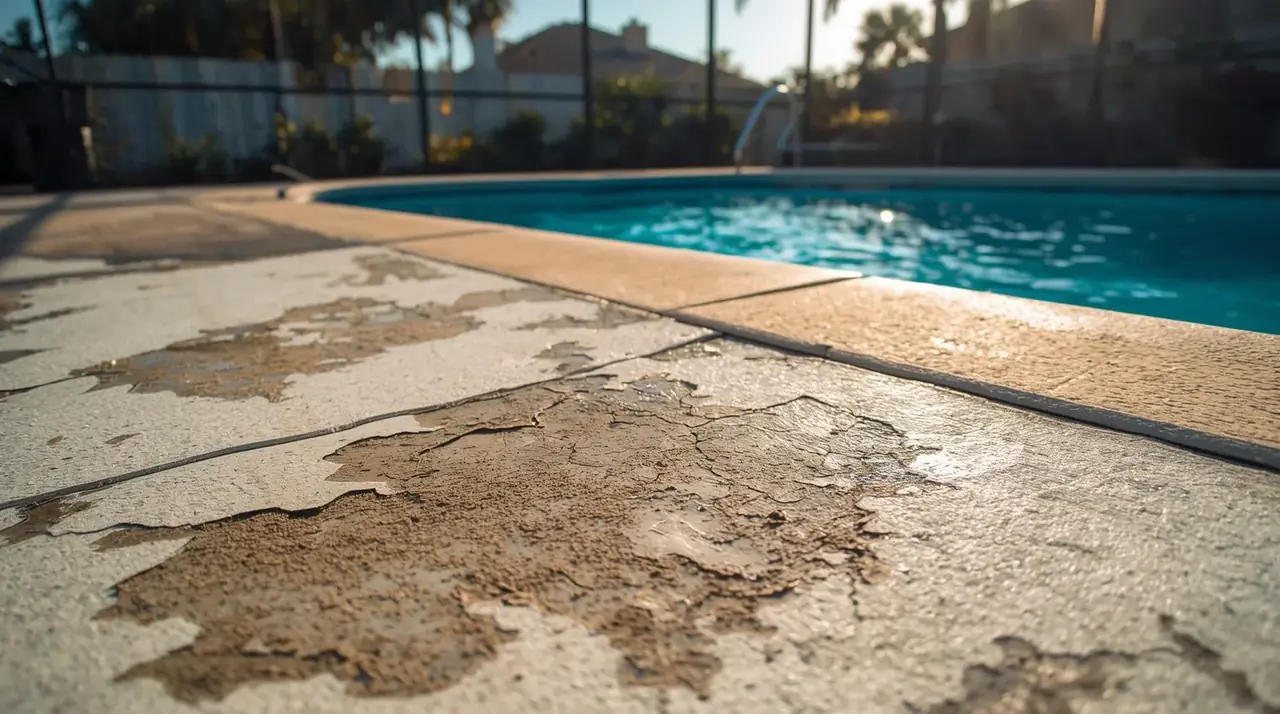
- Peeling, delamination, and hollow-sounding areas mean the old coating must come off, so a quick recoat will not hold.
- Sunken or heaving slab sections and persistent ponding can point past resurfacing toward repair or partial replacement.
When should you resurface a pool deck?
Resurface a pool deck when the surface itself is failing, not just dirty. Peeling coating, hollow spots, worn-smooth texture, and cracks that keep showing through are the clearest signs. Fading or stains on an otherwise solid surface can often be handled with cleaning and sealing instead.
On Tampa Bay decks the sun, afternoon storms, and humidity wear a finish down faster than many owners expect. The checklist below is the same set of things we look at during a free inspection, with the fix each sign usually points to. If you are already sure the deck needs work, start with our overview of pool deck resurfacing in Tampa.
What should you check on your pool deck?
Walk the deck on a dry morning and again after a rain, with a screwdriver handle for tapping. Look for these nine signs:
- Fading or chalking: color has washed out and a powder rubs off on your hand.
- Peeling or flaking: coating lifting at edges, around drains, or in sheets.
- Hollow spots: a dull, drummy sound when you tap the surface.
- Heat: the deck is uncomfortable for bare feet on sunny afternoons.
- Slipperiness: the texture has worn smooth, especially near steps and the pool edge.
- Mildew and algae that return within weeks of cleaning.
- Cracks: new ones, widening ones, or old ones showing through the finish.
- Rough or pitted texture: exposed aggregate, pinholes, or sharp spots.
- Ponding: water that sits in the same places long after a storm.
One sign on its own rarely means a full resurface. Several together, especially peeling, hollow spots, and cracks, usually do.
Is fading or chalking a reason to resurface?
Not by itself. Intense UV breaks down the color in acrylic cool deck and painted finishes, and chalking is the binder at the surface wearing away. If the coating is still bonded and the texture is intact, a careful cleaning and a fresh color coat or sealer can bring it back for a fraction of the cost.
Fading matters more when it comes with bare spots where the texture has worn through to grey concrete. At that point a new color coat alone looks blotchy, and a retexture is the more honest fix.
What does peeling or a hollow-sounding deck mean?
Peeling, flaking, and hollow spots all mean something has lost its bond: layers of old paint, a film-forming sealer that trapped moisture, or a topping that separated from the slab.
People often try to cover this with another coat, and it does not work. New material bonds to the failing layer, so it peels with it. The loose coating has to come off and hollow areas need to be cut out and patched before a new surface goes down. That removal and repair is the core of our pool deck restoration work.
When not to buy a resurface yet
If a contractor quotes a recoat over peeling or hollow areas without mentioning removal, ask how the new layer will bond. Paying for a cheap recoat over a failing surface usually means paying for the full job a season or two later.
Is your deck too hot or too slippery?
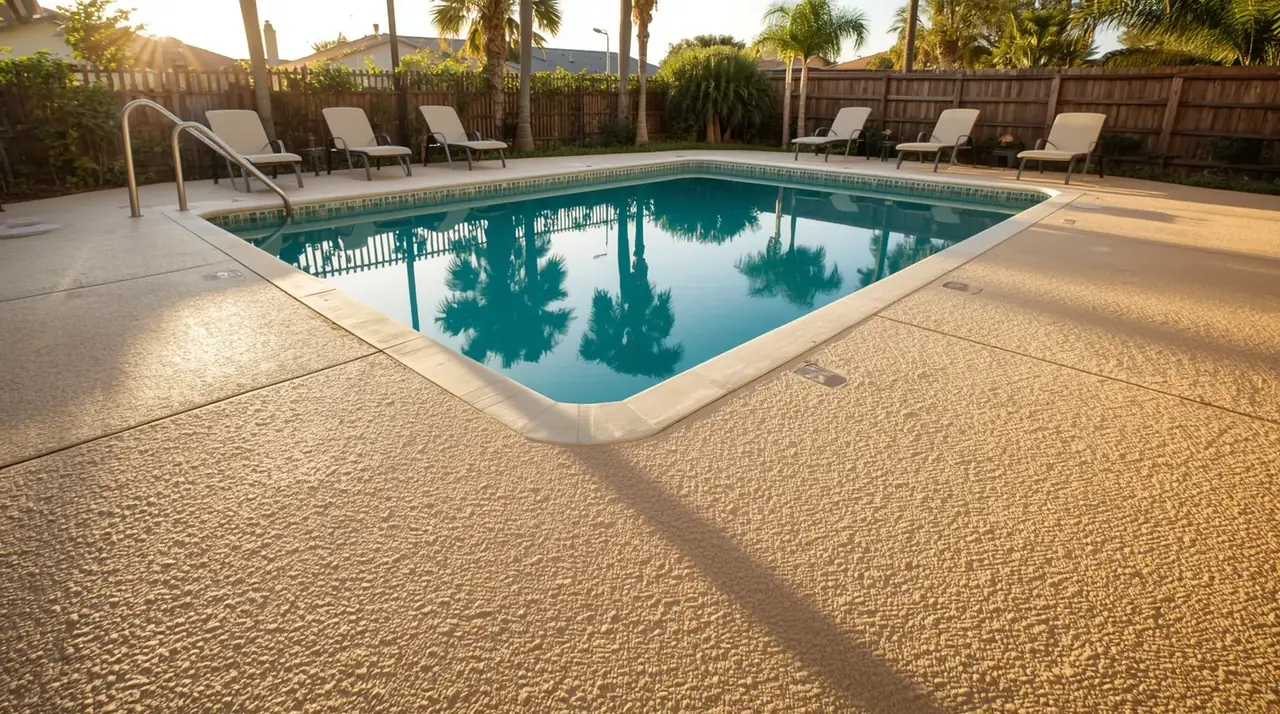
Dark colors, smooth paint, and bare concrete get hot in direct Florida sun, and smooth surfaces get slick when wet. Both problems come from the top layer, so the fix is usually a new texture rather than structural work. A light-colored acrylic cool deck, often called Kool Deck, or a knockdown texture is the usual answer on Tampa Bay decks because it stays more comfortable underfoot and gives bare feet more grip.
If the surface underneath is sound, a pool deck retexture handles both issues. Our online estimator starts retexture over a sound surface at about $6.50 per square foot, and the final price depends on inspection. Sealers can also make a deck slicker, which our guide to slippery pool deck fixes covers in detail.
Why do mildew and algae stains keep coming back?
Humidity, shade from screened lanais, and sprinkler or roof runoff keep parts of a deck damp, and mildew and algae thrive there. If stains come back within weeks of a good cleaning, the surface is usually porous or worn, so growth roots into the finish instead of sitting on top.
Start with a proper pressure wash and treatment. If the deck looks good afterward and stays clean for months, a penetrating sealer may be all you need. If the stains return fast and the texture is worn, resurfacing gives you a tighter surface that is easier to keep clean.
Do cracks, pits, or rough spots mean resurfacing?
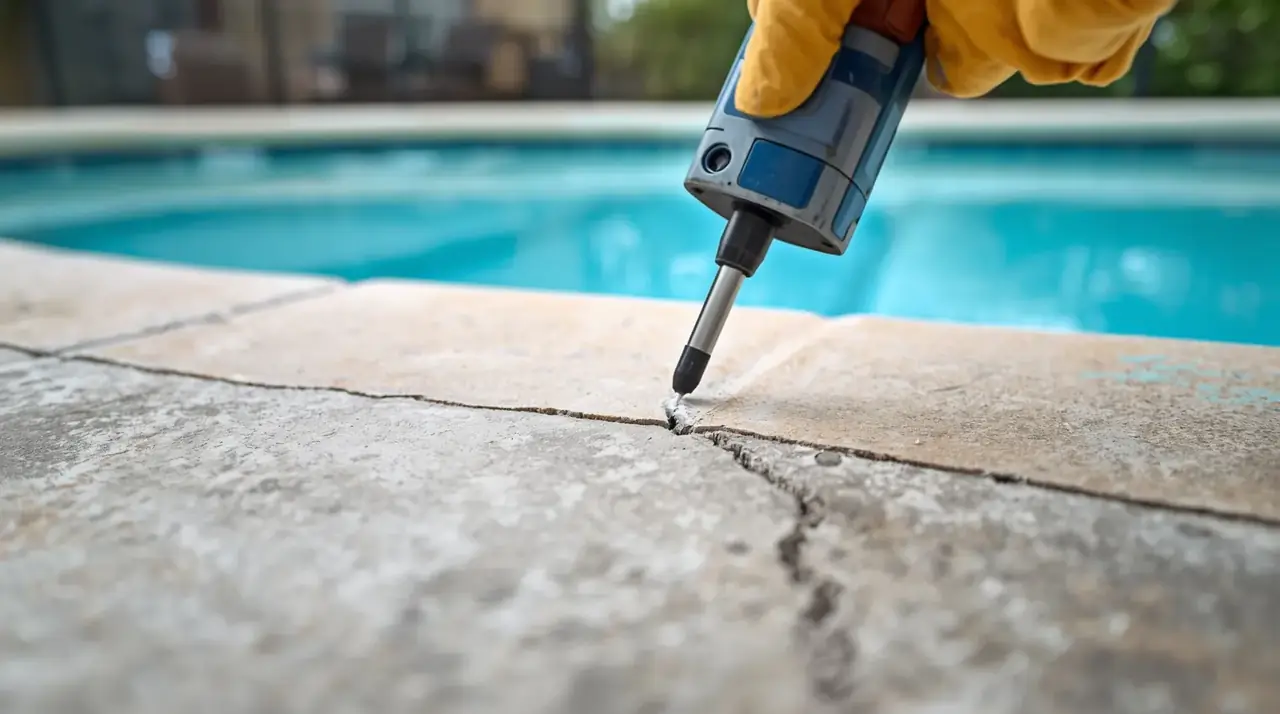
A few stable hairline cracks are common and can be filled and covered during resurfacing. Cracks that widen, show a height difference, or keep reappearing through the finish need repair first, which our pool deck crack repair guide explains.
Rough or pitted texture, with exposed sand, pinholes, or sharp edges, usually means the top layer has eroded from weather, pool chemicals, or salt-chlorine splash-out. A new overlay or texture is the standard fix when the slab below is solid, and it is the most common reason people call us about resurfacing a pool deck in Tampa Bay. Our online estimator starts full restoration, including structural repair, crack stitching, and resurfacing, at about $3 per square foot, with the final price set after inspection.
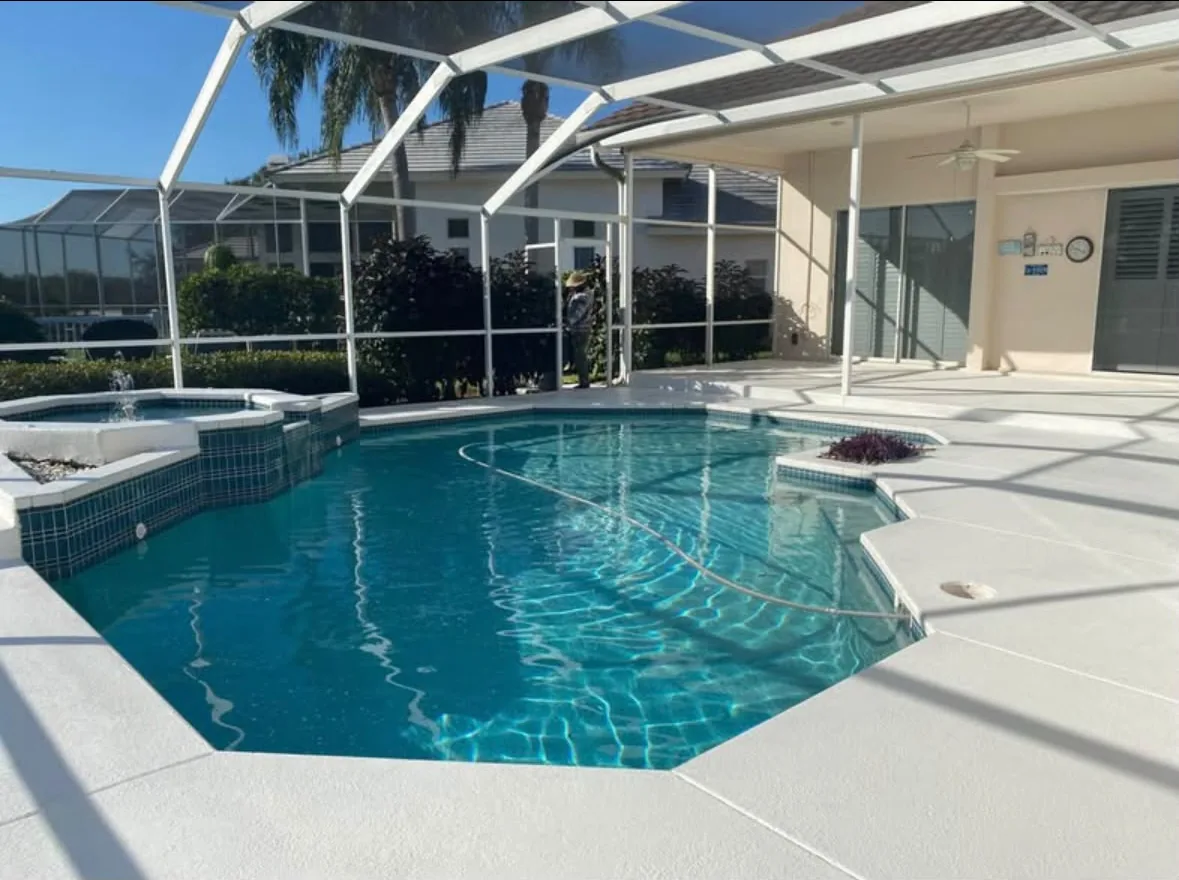
What does water ponding on a pool deck mean?
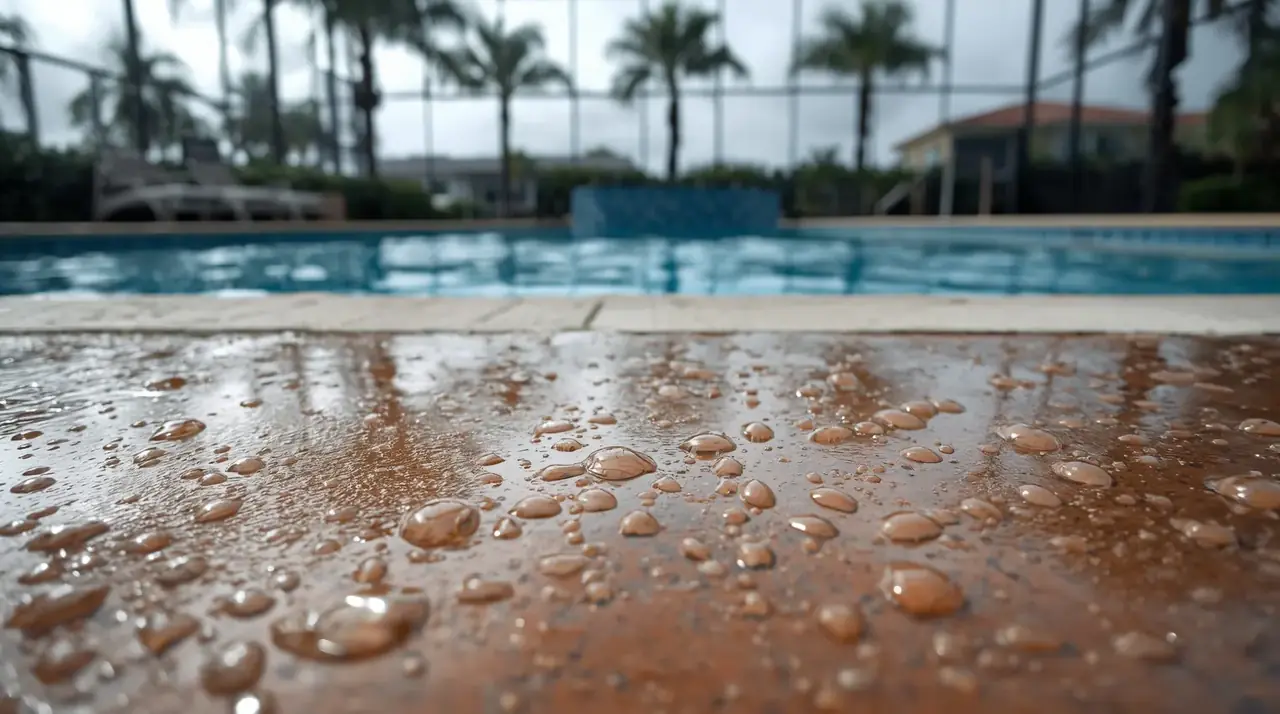
Puddles that sit for hours after a summer storm usually mean a low spot, a clogged deck drain, or a section that has settled into the sandy soil. Standing water feeds algae and can seep under the slab, making settlement worse.
Shallow low spots can often be built up with a polymer-modified cementitious overlay during resurfacing. But if a whole section has sunk, tilts toward the house, or leaves a trip edge at a joint, a new surface will not fix the slope. That is where partial replacement or slab repair belongs in the conversation,.
Which fix matches which sign?
- Dirty, stained, or mildewed but solid: clean and treat.
- Faded but bonded, or pavers that look tired: clean and seal.
- Hot, slick, or worn-smooth over a sound surface: retexture.
- Peeling, hollow spots, cracks, or pitting: restore with repair and a full resurface.
- Sunken, heaving, or badly tilted slab: repair or replace those sections.
Pool Decks of Tampa is a family-owned, State Certified Specialty Contractor, licensed and insured, working across Hillsborough, Pinellas, Pasco, and Manatee counties. Most residential jobs take 2 to 5 days depending on scope, and every deck restoration includes a written warranty. To see what Tampa pool deck resurfacing involves for your deck, send us photos for a free estimate or call (813) 553-5620 to book a free on-site inspection.
Frequently asked questions
›How often does a pool deck need resurfacing in Florida?
It varies with the finish, sun exposure, drainage, and upkeep. Decks under a screened lanai with good drainage often last longer than fully exposed decks that take roof runoff. Rather than a fixed schedule, watch for the signs that the finish has failed: peeling, hollow spots, worn-through texture, and stains that return quickly after cleaning.
›Can I just paint my pool deck instead of resurfacing it?
Paint can refresh color on a sound, bonded surface, but it does not fix peeling, hollow spots, cracks, or worn texture, and it can make a deck slicker and hotter. Painting over a failing coating usually peels within a season or two. If the existing surface is solid and you only want color, ask about a recoat. If it is failing, resurfacing is the longer-lasting choice.
›Is a hot pool deck a sign it needs resurfacing?
Heat alone does not mean the deck has failed, but it is a good reason to consider a new texture. Dark paint and bare concrete absorb a lot of sun. A light-colored acrylic cool deck or knockdown texture is usually more comfortable for bare feet, and it can often be applied as a retexture over a sound surface without full restoration.
›Should I pressure wash my pool deck before deciding?
Yes, if you can do it carefully. A good cleaning shows whether you are dealing with surface staining or a worn, porous finish. If the deck looks good afterward and stays clean, sealing may be enough. If cleaning reveals peeling, bare patches, or cracks, that tells you resurfacing is the better fix. Avoid high pressure on loose coatings.
›Can you resurface a pool deck with cracks in it?
Yes, as long as the cracks are repaired first. Stable cracks are opened, filled, and sometimes stitched, then covered by the new surface. Cracks with height differences, active movement, or large hollow areas around them need more work, and severely settled sections may need replacement before resurfacing makes sense.
About Pool Decks of Tampa
We are a family-owned crew that resurfaces, repairs, and restores pool decks across Hillsborough, Pinellas, and Pasco counties. We are a State Certified Specialty Contractor, licensed and insured, and every deck restoration comes with a written warranty. These guides come from the questions homeowners ask us during inspections. See our pool deck resurfacing work in Tampa, read customer reviews, or verify any Florida contractor license.