Pool deck guide
What Is the Best Pool Deck Surface for Florida Heat?
Which pool deck surface stays coolest in Florida sun? Compare cool deck, pavers, travertine, stamped overlays, and bare concrete for barefoot comfort and grip.
By the Pool Decks of Tampa crew · Published · 7 min read
Quick answers
- Color matters most: light-colored surfaces stay noticeably more comfortable for bare feet than dark ones, whatever the material.
- A light acrylic cool-deck texture is usually the most budget-friendly way to make an existing concrete deck cooler underfoot.
- Light travertine and light pavers also stay comfortable, but cost more and need joint and sealer upkeep.
- Dark finishes, dark stamped colors, and glossy film-forming sealers are the surfaces most likely to feel hot and, when wet, slick.
- In a screened lanai, mildew and traction matter as much as heat; in full sun, color and texture should lead the decision.
What is the coolest pool deck surface in Florida?
For most Tampa Bay homes, the coolest practical pool deck surface is a light-colored, textured finish: a white or pale tan acrylic cool-deck texture, light travertine, or light-colored pavers. Color matters more than the material itself. A dark version of almost any surface will feel hotter to bare feet than a light version of the same thing.
If you already have a sound concrete deck, resurfacing it with a light cool-deck texture is usually the least disruptive way to get a cooler surface. That is a large part of the work we do in pool deck resurfacing in Tampa, and it is often the first option we price for homeowners who say the deck burns their feet.
Why does color matter more than you think?
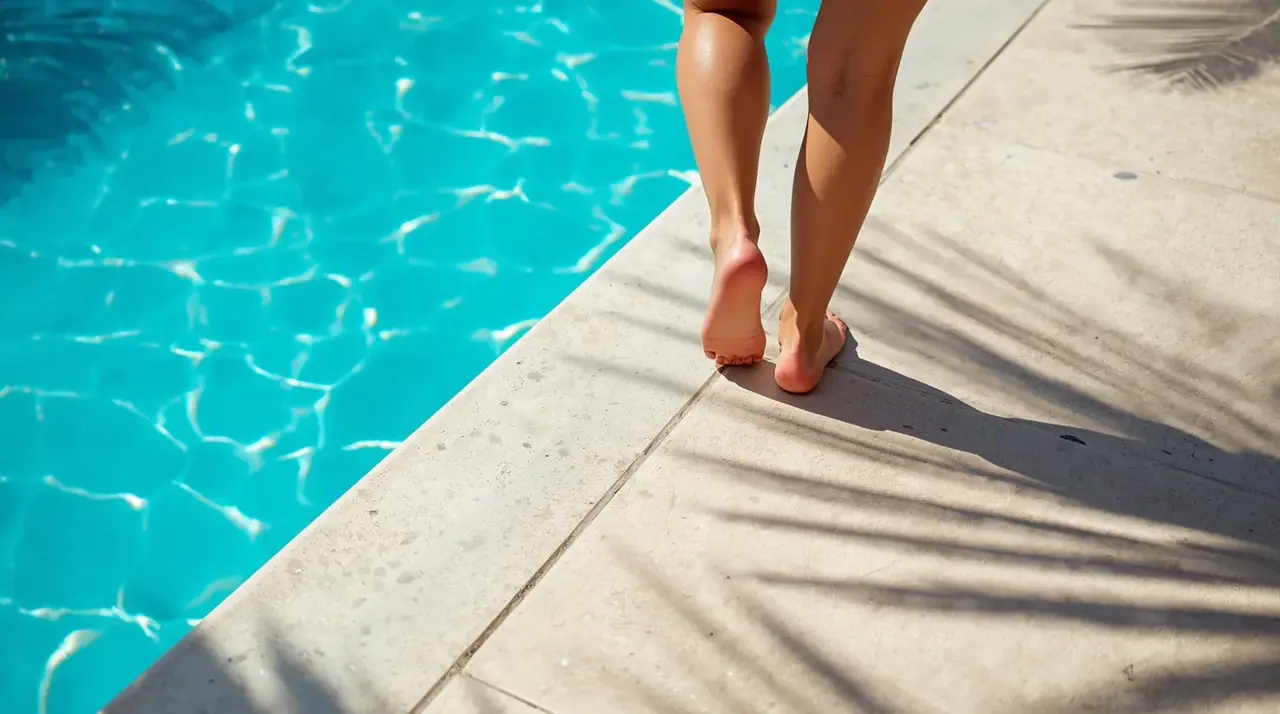
Dark surfaces absorb more sunlight and hold more heat; light surfaces reflect more of it. On a Florida summer afternoon that is the difference between walking to the pool and hopping to it. We avoid quoting temperature numbers because results vary with sun, shade, wind, and product, but the direction is consistent.
A charcoal stamped overlay or dark gray paver may look great in a showroom photo, but in an unscreened backyard with afternoon sun it can be uncomfortable for kids and pets. Mid-tone grays and tans are a reasonable compromise if very light colors show too much dirt for your yard.
A quick test before you choose
Ask for a sample board in the colors you are considering and leave them in the sun on your own deck for an afternoon. Touch them, then touch them again with a wet hand. It is a simple check, and it tells you more than a brochure will.
How do the common pool deck surfaces compare?
Here is how the main options stack up for barefoot comfort, from a crew that installs and repairs them:
- Light acrylic cool-deck texture: designed for comfort underfoot, good wet traction with the right knockdown, and it goes over existing concrete. It needs periodic recoating and can show mildew in shade.
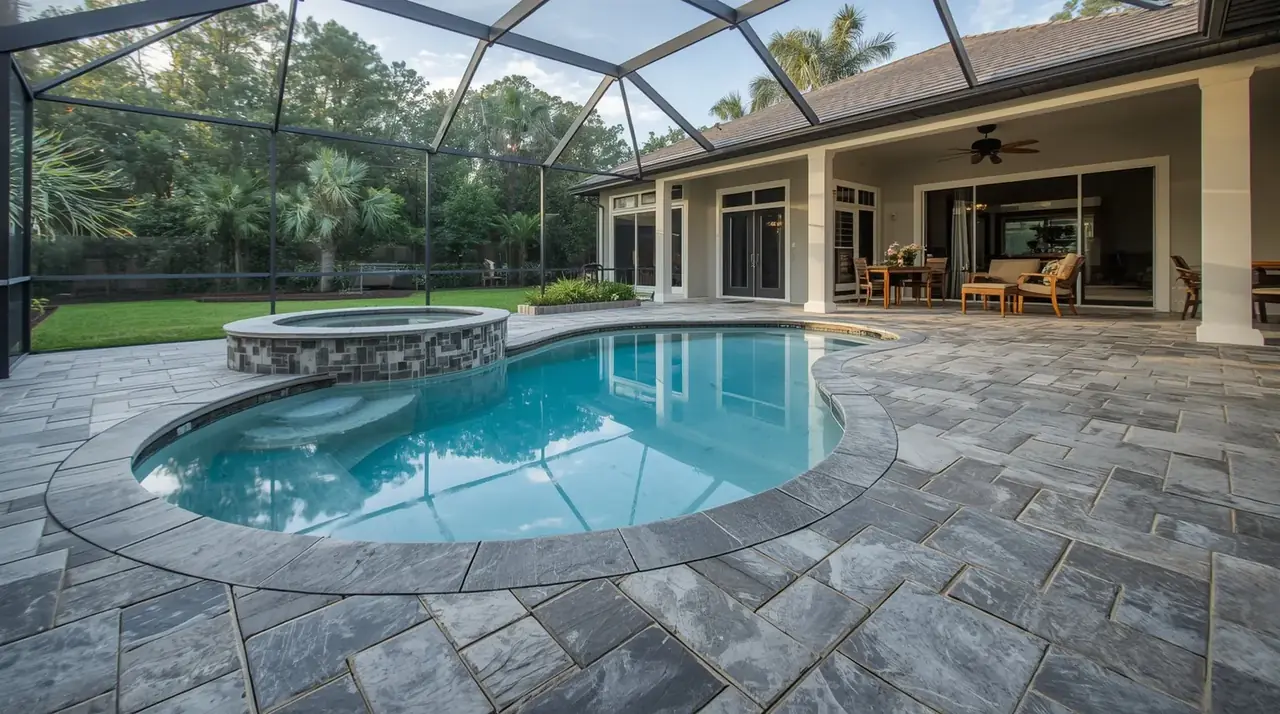
- Light travertine: stays comfortable and looks upscale, with natural grip on tumbled or textured finishes. It costs more, is porous, and needs sealing and joint care.
- Light-colored pavers: comfortable in pale shades, easy to repair one unit at a time. Joints can wash out, shift on sandy soils, and grow weeds or algae.
- Stamped concrete overlay: very flexible on pattern, and light colors stay reasonably comfortable. Dark colors and glossy sealers make it hotter and slicker.
- Bare broom-finished concrete: grippy and inexpensive, but plain gray runs warmer than light finishes, and it stains and cracks visibly over time.
- Dark paint, dark coatings, or dark stone: the hottest group for bare feet. We generally steer families away from them on unshaded decks.
Cool deck and stamped overlays are both resurfacing options for an existing slab, so they are often the realistic choices when the concrete underneath is sound. For more on each, see our guides on cool deck resurfacing and stamped concrete pool deck overlays.
Does texture affect heat and traction?
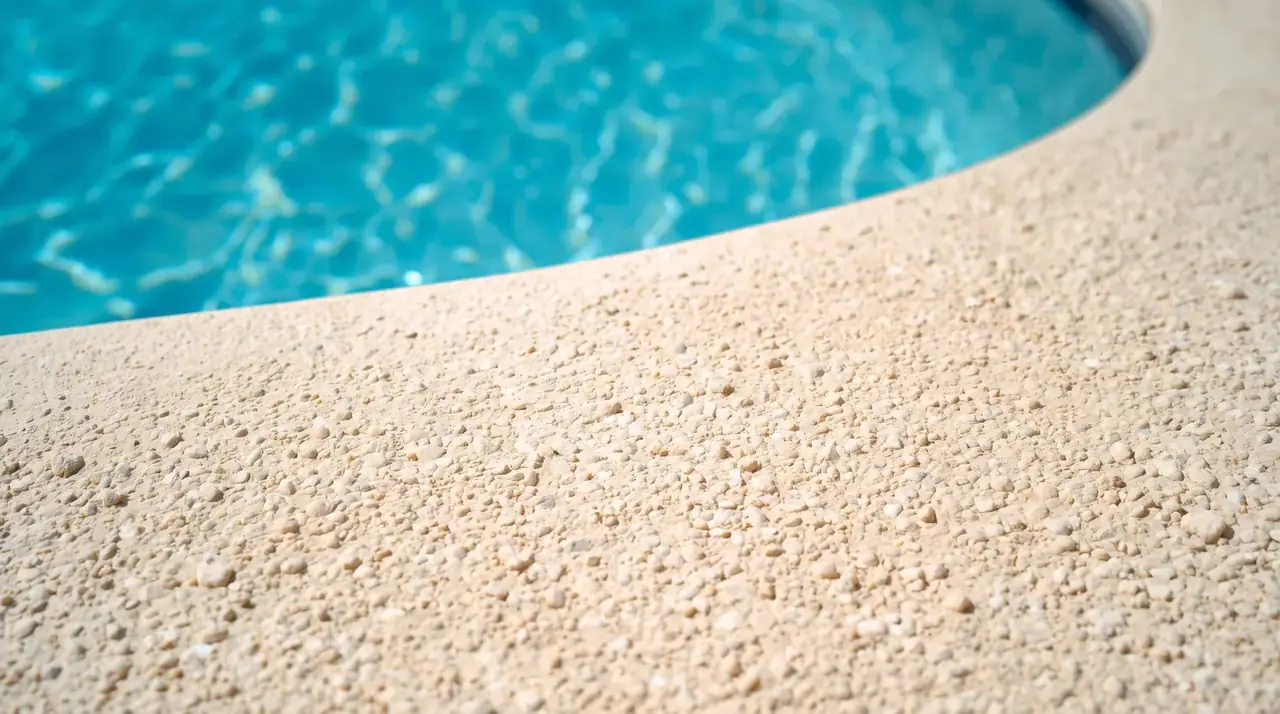
A knockdown or lightly textured surface puts less skin in contact with the deck than a smooth one, and it holds traction when wet. Very smooth, polished, or glossy surfaces tend to feel hotter in contact and slicker after a summer thunderstorm or a cannonball.
There is a trade-off. A heavier texture grips better but is harder to clean and can feel rough if it is overdone. A finer texture is easier on feet and easier to rinse but should not be so smooth that it loses grip. Around steps, spa edges, and the first few feet from the water, we lean toward more texture. If slipping is already a concern, our guide to slippery pool deck fixes covers the options.
Sealer choice matters too. Penetrating sealers protect without changing the feel much, while high-gloss film-forming sealers can make any surface slicker and, on darker colors, more heat-absorbing. If you want a wet look on pavers, ask about adding a grit additive.
Does a screened lanai change which surface is best?
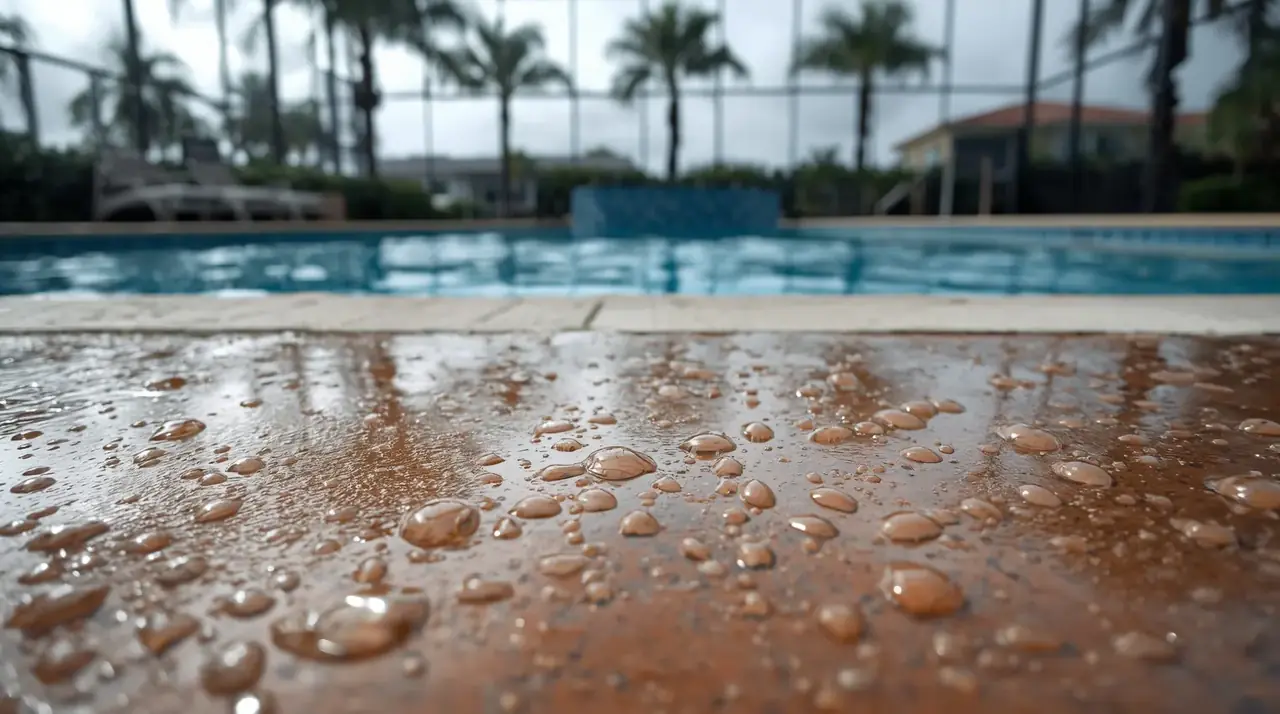
Yes. Screen enclosures cut some direct sun, so heat is less of an issue inside many lanais. The trade is moisture. Screened decks dry more slowly after rain and hold humidity, so mildew and algae become the bigger maintenance concern.
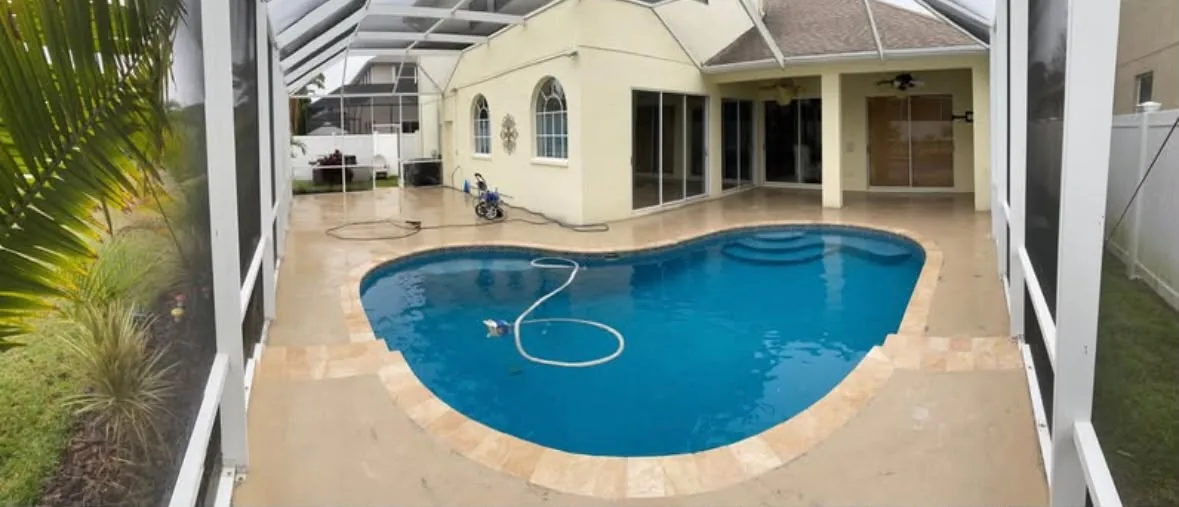
In a screened lanai, a light finish that is easy to rinse is usually the sweet spot, and you have a little more freedom to go with a mid-tone or a travertine look. On an unscreened deck in full southern or western sun, prioritize the lightest color you can live with. We also check how the surface meets the enclosure posts, because water pooling around post bases is a common source of staining and finish failure.
How much maintenance does each surface need?
UV, humidity, and hurricane-season rain work on every surface. The question is what kind of upkeep:
- Cool deck: regular rinsing, mildew cleaning in shade, and a recoat of color every so often before it chalks.
- Pavers and travertine: periodic cleaning, joint sand top-ups, and resealing; watch for settled or lifted units.
- Stamped overlays: cleaning plus resealing on a schedule, since the sealer protects the color.
- Bare concrete: cleaning, and dealing with stains and cracks as they show up.
Lighter colors show dirt and leaf tannin faster, so under heavy oak cover a warm tan may beat pure white.
Which surface should you choose for your situation?
- Sound concrete deck, full sun, budget matters: a light cool-deck retexture.
- Sound slab, want a stone or tile look: a light-colored stamped overlay or a hand-troweled stone-look overlay.
- Building new or replacing the deck, want a premium look: light travertine or light pavers.
- Screened lanai with heavy shade: a light, easy-to-clean texture with good wet grip.
- Cracked, settled, or failing slab: fix the base first, then pick the finish.
When a light finish over existing concrete fits, a pool deck retexture is usually the scope. Our online estimator starts at about $6.50/sq ft for a retexture over a sound surface and about $12/sq ft for a hand-troweled stone-look overlay. The final price depends on what the inspection finds.
Get a recommendation for your deck
Pool Decks of Tampa is a family-owned, State Certified Specialty Contractor, licensed and insured, serving Hillsborough, Pinellas, Pasco, and Manatee counties, including Tampa, St. Petersburg, Clearwater, Brandon, Wesley Chapel, Riverview, Lakewood Ranch, and Safety Harbor. When we are resurfacing a pool deck in Tampa Bay, we start by checking the slab, the sun exposure, and how the family uses the deck before recommending a color and texture.
To get started, send us photos for a free estimate with a wide shot of the deck and a note on whether it is screened. We can follow up with a free on-site inspection and bring color samples. You can also call (813) 553-5620 or learn more about our pool deck resurfacing services.
Frequently asked questions
›What is the coolest pool deck material for bare feet?
In practice, color matters more than material. Light-colored textured finishes such as a white or pale tan cool deck, light travertine, and light pavers all stay noticeably more comfortable than dark surfaces. For an existing concrete deck, a light acrylic cool-deck texture is usually the most affordable way to get there without tearing anything out.
›Are pavers or cool deck cooler?
When both are similarly light in color, the difference underfoot is usually smaller than people expect. Cool deck has the edge on cost when you already have a sound slab, since it goes over the existing concrete. Pavers cost more but allow single-unit repairs. A dark paver will feel hotter than a light cool deck, and the reverse is also true.
›Is travertine really cooler than concrete?
Light travertine generally feels more comfortable than plain gray concrete, mostly because of its pale color and porous, textured face. It is not magic, though. Darker travertine runs warmer, and glossy sealers change the feel. Travertine also costs more and needs sealing and joint care, so weigh comfort against budget and maintenance.
›Does sealing a pool deck make it hotter?
A penetrating sealer has little effect on how a deck feels. High-gloss film-forming sealers can darken color slightly and make a surface feel slicker, especially when wet, and a darker color absorbs more sun. If you want a sealed finish around the pool, ask about a lower-sheen product and a grit additive for traction.
›Can I make my existing dark pool deck cooler without replacing it?
Often, yes. If the concrete is sound, it can be cleaned, repaired, and resurfaced with a light-colored acrylic cool-deck texture or a light overlay. Peeling paint or failing coatings have to be removed first so the new finish bonds properly. An inspection will tell you whether the slab is a good candidate.
About Pool Decks of Tampa
We are a family-owned crew that resurfaces, repairs, and restores pool decks across Hillsborough, Pinellas, and Pasco counties. We are a State Certified Specialty Contractor, licensed and insured, and every deck restoration comes with a written warranty. These guides come from the questions homeowners ask us during inspections. See our pool deck resurfacing work in Tampa, read customer reviews, or verify any Florida contractor license.