Pool deck guide
Stamped Concrete Pool Deck Overlay: Is It Right for Your Deck?
How a stamped concrete overlay pool deck works, which patterns suit Tampa Bay homes, whether your slab qualifies, and how it compares to pavers or a retexture.
By the Pool Decks of Tampa crew · Published · 7 min read
Quick answers
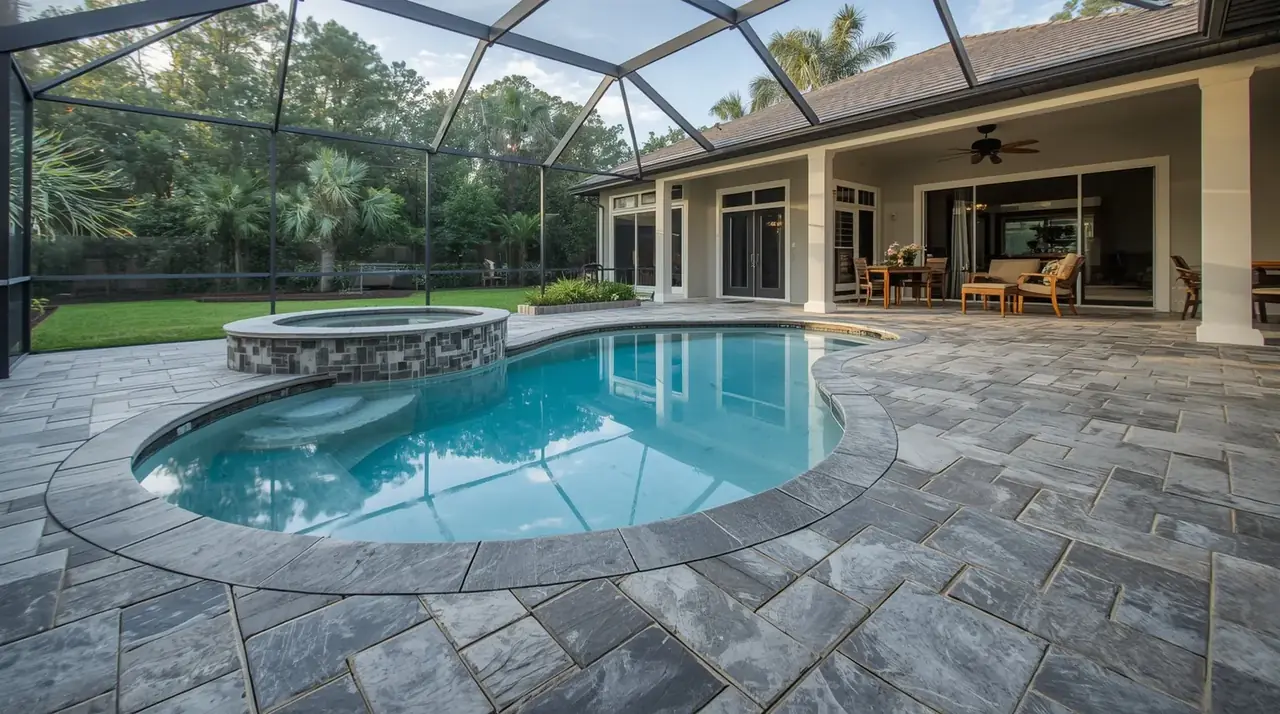
- A stamped overlay is a thin polymer-modified cementitious layer bonded to your existing slab and imprinted with a pattern, so you get a stamped look without tearing out the deck.
- The existing concrete has to be structurally sound; active settlement, hollow areas, or moving cracks need repair first, and some slabs should be replaced instead.
- Around a pool, the sealer matters as much as the pattern: it should be a non-glossy or grit-modified finish so the deck stays walkable when wet.
- Plan on periodic cleaning and resealing, which is more upkeep than a basic retexture but less than resetting pavers.
What is a stamped concrete overlay on a pool deck?
A stamped overlay is a thin layer of polymer-modified cementitious material troweled over your existing concrete pool deck, then imprinted with textured mats while it is still workable. The result looks like stamped concrete, slate, or stone, but it is bonded to the slab you already have rather than poured as a new one.
That is the main difference from new stamped concrete, which means breaking out the old deck and pouring a fresh slab several inches thick. An overlay skips demolition, so the job is faster and less disruptive, and it is a decorative option we offer as part of pool deck resurfacing in Tampa. The trade-off is that an overlay inherits whatever is going on underneath it.
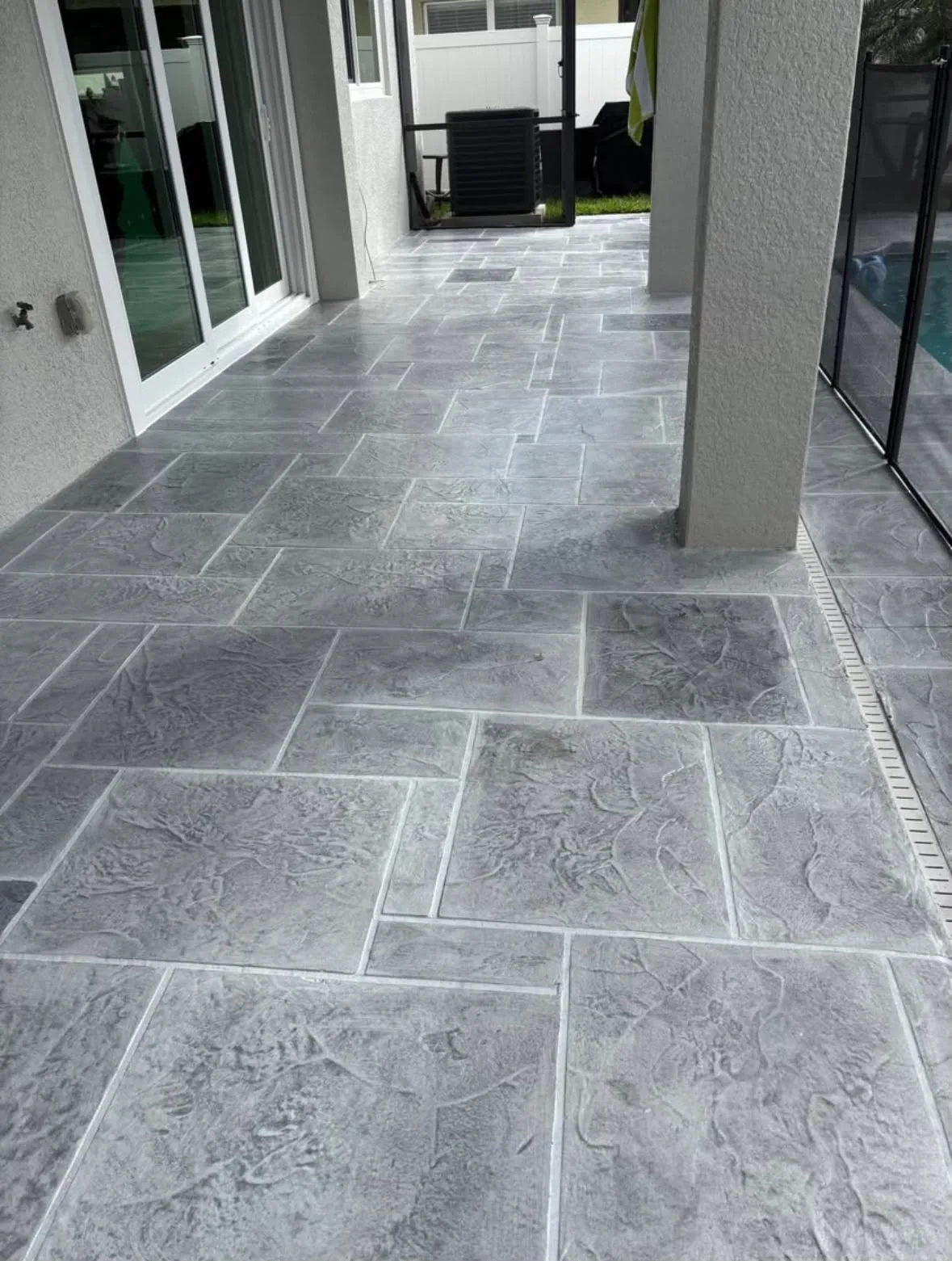
Which stamped patterns work best around a pool?
Most homeowners pick from four patterns. View samples outside in daylight, since each reads differently in a screened lanai than in open sun.
- Ashlar slate: rectangular and square stones in a repeating layout. It is the most common choice because the grout lines hide minor imperfections and the texture gives good underfoot grip.
- Flagstone or random stone: irregular shapes that look more natural and casual. It works well with landscaped yards and curved pool shapes.
- Wood plank: a boardwalk look with grain texture. It suits coastal homes, though deep grain lines can collect sand and debris.
- Travertine-look: softer, tumbled-stone texture usually paired with light colors. It reads as upscale and pairs well with stone coping.
Color choice matters as much as pattern in Florida. Light tans, greys, and creams stay more comfortable under bare feet than dark charcoal or deep brown, and they show less fading from intense UV. A two-tone release color adds depth without darkening the deck.
Does your existing slab qualify for a stamped overlay?
This is what we check first on an inspection, because a stamped overlay is only as good as the concrete beneath it. On Tampa Bay decks we usually see a mix of hairline shrinkage cracks, a few wider cracks near the pool beam or enclosure posts, and sometimes a section that has dropped on sandy soil.
- Hairline and stable cracks: usually fine once they are cleaned out and repaired before the overlay goes down.
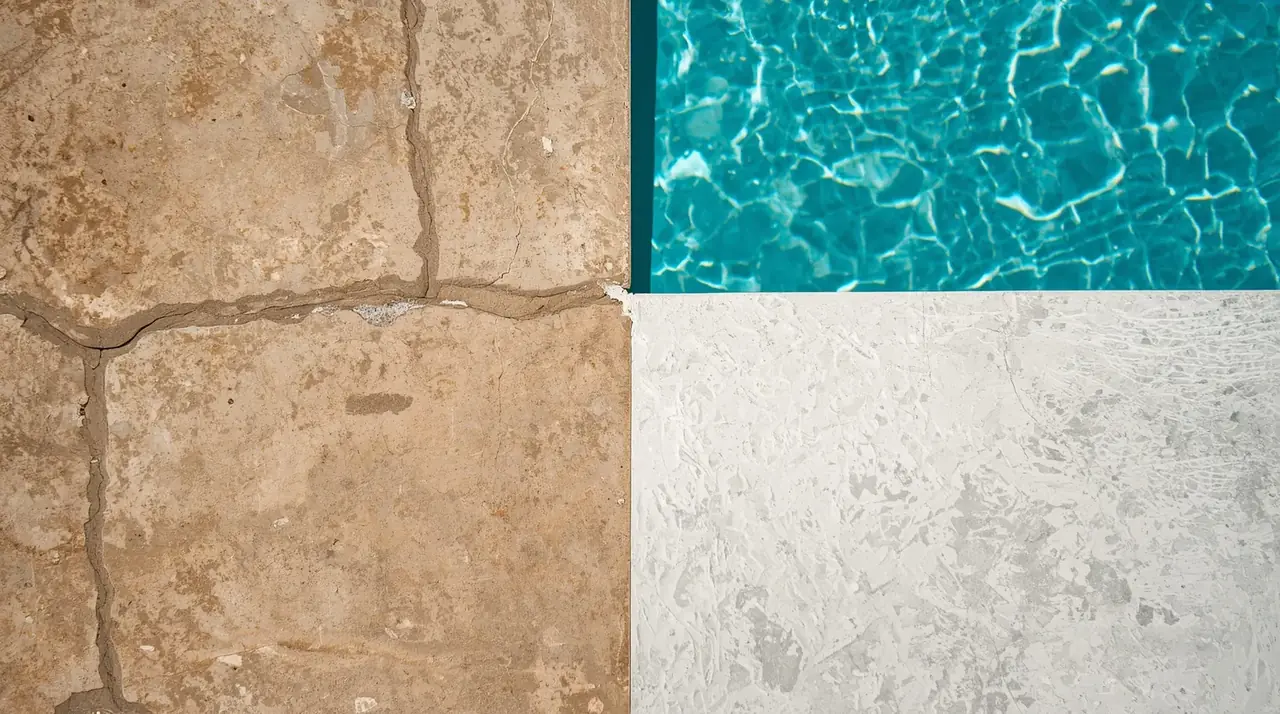
- Cracks that keep opening or have a height difference: a sign the slab is still moving. These need to be addressed, and the overlay will likely crack along the same line if they are not.
- Hollow-sounding or delaminating areas: the loose material has to come off down to sound concrete.
- Existing paint, glossy sealer, or a failing coating: these have to be removed so the overlay bonds to the concrete, not to a layer that is already letting go.
- Settled sections that hold water: an overlay will not fix drainage, so low spots and slope toward the house need a plan first.
When we would not recommend an overlay
If large parts of the deck are heaving, sinking, or broken into loose pieces, a stamped overlay is money spent on a short-lived finish. In that case the honest answer is often partial or full replacement. Our guide on pool deck resurfacing vs. replacement walks through how to tell the difference.
Is a stamped concrete pool deck slippery or hot?
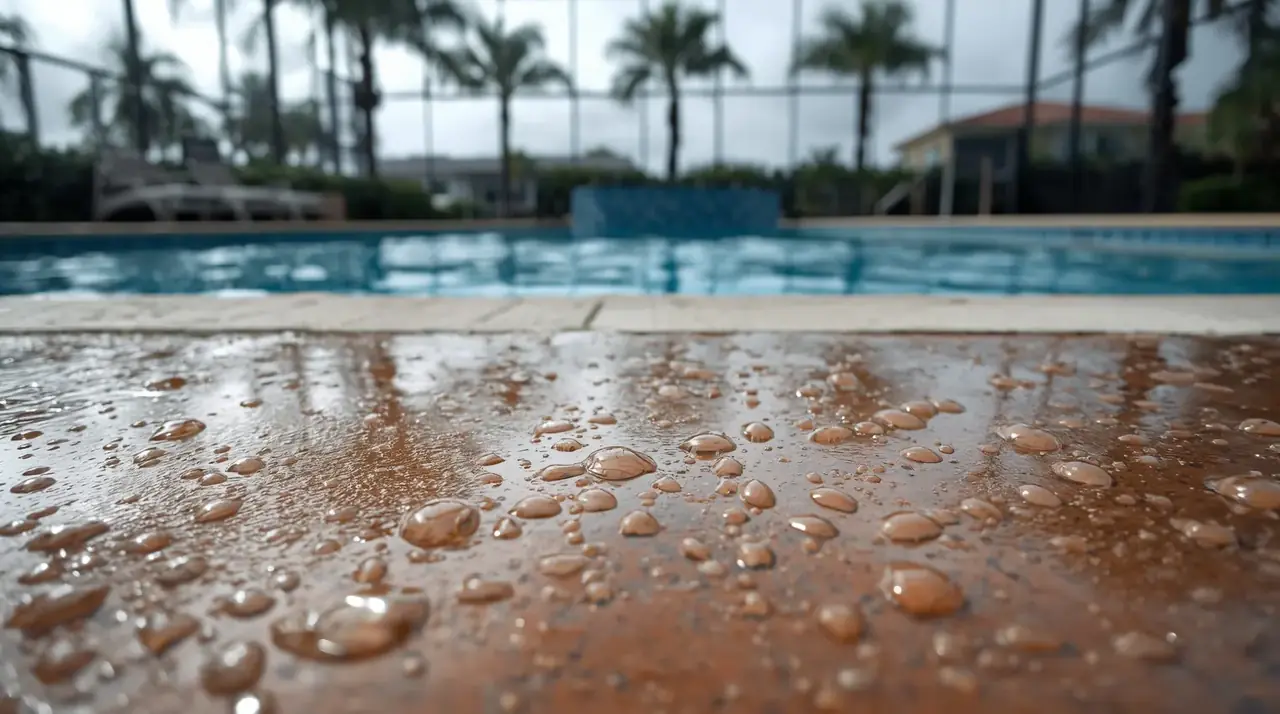
A stamped texture by itself has decent grip, but the sealer on top decides how it feels when wet. Many decorative sealers are film-forming acrylics that dry to a glossy finish, which looks great on a driveway and can be slick around a pool. For pool decks we use a lower-sheen sealer and broadcast or mix in a fine anti-slip grit so the surface keeps traction when it is wet from splashing or an afternoon thunderstorm.
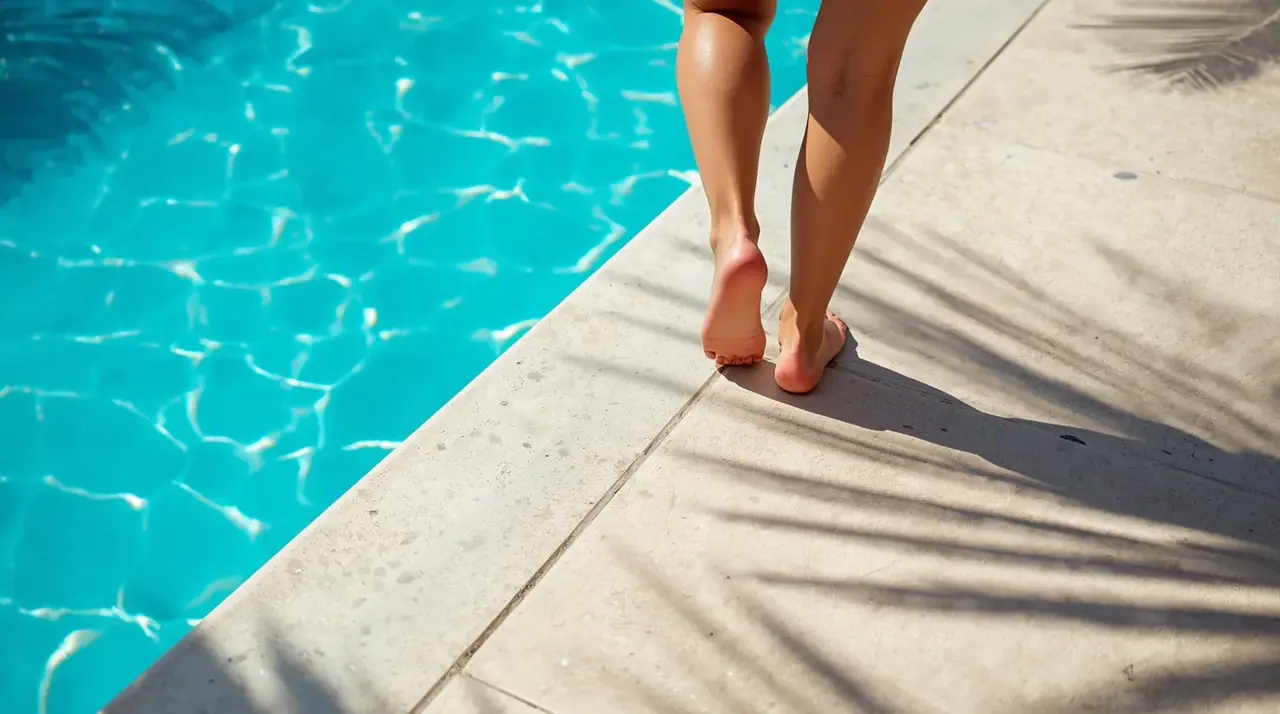
On heat, stamped overlays generally run warmer underfoot than a light acrylic cool deck finish, especially in darker colors and in full sun. If barefoot comfort is the top priority, compare a light cool deck finish against a stamped overlay before you choose. If you already have a slippery stamped or sealed deck, see how to fix a slippery pool deck.
How do you maintain and reseal a stamped overlay?
Maintenance is mostly about the sealer. Florida sun breaks it down over time, and humidity plus shade under a lanai screen encourage mildew and algae in the grout lines. A stamped overlay that is cleaned and resealed on schedule keeps its color and texture much longer than one that is left alone.
- Rinse and scrub shaded corners and screen-wall edges where mildew starts.
- Avoid high-pressure blasting close to the surface, which can etch texture and strip sealer.
- Reseal when the sealer turns chalky, patchy, or stops beading water.
- Use a compatible, non-glossy sealer with anti-slip grit. Mixing sealer types can cause peeling or a cloudy look.
- Rinse off salt-chlorine pool splash-out, since salt residue is hard on sealers over time.
How often you reseal depends on sun exposure, shade, and traffic, so we would rather inspect the surface than quote a fixed interval. If cleaning is the main issue right now, our pool deck pressure washing service is set up for decorative surfaces.
Stamped overlay vs. pavers: which is better for a Florida pool deck?
Pavers are individual units on a sand base, so a section that settles can be lifted and reset, and they handle minor ground movement without cracking. But swapping a concrete deck for pavers is a bigger project, and pavers bring their own upkeep: weeds and ants in the joints and joint sand washing out in hurricane-season rain.
A stamped overlay keeps your existing slab, gives a continuous surface with no joint sand, and usually costs less than tearing out concrete for pavers. It is less forgiving if the slab moves. If you already have pavers and they look tired, paver restoration is usually a better path than covering them.
Stamped overlay vs. a simple retexture: what is the difference?
A retexture applies a thin sprayed or troweled knockdown texture and an acrylic finish coat, often the cool deck style, sometimes called Kool Deck. It is cooler underfoot, quicker to install, and lower in cost. A stamped overlay is thicker, takes more hand work, and gives a stone or slate look that a knockdown texture cannot match.
For pricing context, our online estimator starts at about $6.50 per square foot for a retexture over a sound surface and about $12 per square foot for a hand-troweled stone-look overlay. The final price depends on the inspection, including crack repair, coating removal, and access around screen posts and steps. Many homeowners compare both as part of Tampa pool deck resurfacing before choosing.
Getting a stamped overlay quote near you
We are a family-owned State Certified Specialty Contractor, licensed and insured, serving Hillsborough, Pinellas, Pasco, and Manatee counties. Typical residential jobs take 2 to 5 days depending on scope, and every deck restoration includes a written warranty.
Start by sending photos for a free estimate: one wide shot of the whole deck plus close-ups of cracks, low spots, and any peeling finish. We will follow up with a free on-site inspection and tell you plainly whether a stamped concrete overlay suits your slab or whether another option from our pool deck resurfacing services makes more sense. You can also call (813) 553-5620.
Frequently asked questions
›How long does a stamped concrete overlay last on a pool deck?
It depends on the slab underneath, sun exposure, and how consistently the sealer is maintained. A well-bonded overlay on stable concrete, kept clean and resealed when the finish wears, can last many years. Overlays on slabs that are still settling tend to crack early, which is why we inspect for movement before recommending one.
›Can you put a stamped overlay over an existing cool deck finish?
Usually the old cool deck texture has to be removed or ground down to sound concrete first. Applying an overlay over a coating that is chalking, peeling, or poorly bonded means the new layer is only as strong as the old one. During the inspection we test how well the existing finish is attached and include removal in the scope if needed.
›Will a stamped overlay hide cracks in my pool deck?
It will hide stable cracks that are repaired before the overlay goes down. It will not stop a crack that is still moving, and those tend to reappear through the new surface along the same line. We repair cracks first and keep working joints open with flexible sealant rather than burying them.
›Is a stamped overlay safe for kids running around the pool?
It can be, as long as the sealer is chosen for pool use. We use a lower-sheen sealer with anti-slip grit rather than a high-gloss finish. No pool deck is slip-proof, so the usual rules about walking near the water still apply, but a properly sealed stamped overlay should grip well when wet.
About Pool Decks of Tampa
We are a family-owned crew that resurfaces, repairs, and restores pool decks across Hillsborough, Pinellas, and Pasco counties. We are a State Certified Specialty Contractor, licensed and insured, and every deck restoration comes with a written warranty. These guides come from the questions homeowners ask us during inspections. See our pool deck resurfacing work in Tampa, read customer reviews, or verify any Florida contractor license.