Pool deck guide
Cool Deck Resurfacing: Can You Repair or Recoat an Old Cool Deck?
Cool deck resurfacing explained: why old cool deck cracks and chalks, when you can resurface over it vs. remove it, crack repair, recoating, and Florida upkeep.
By the Pool Decks of Tampa crew · Published · 7 min read
Quick answers
- Cool deck (often called Kool Deck) is a thin, light-colored acrylic and cement texture troweled over a concrete pool deck to stay comfortable underfoot.
- Old cool deck usually fails at the surface first: it chalks, fades, roughens, and cracks where the slab beneath moves.
- If the existing cool deck is still well bonded, it can usually be repaired and resurfaced over; loose, hollow, or peeling areas have to come off first.
- Cracks should be repaired before any new texture goes down, or they tend to reappear in the new finish.
- A recoat or repaint refreshes color on a sound texture, but it does not fix rough, delaminating, or cracked cool deck.
What is cool deck, and can it be resurfaced?
Yes. In most cases an old cool deck can be resurfaced as long as the material still bonded to the concrete is sound. Loose or hollow sections get removed, cracks get repaired, and a new texture and color coat goes on top. When the existing layer is failing across much of the deck, removal down to the slab is the better call.
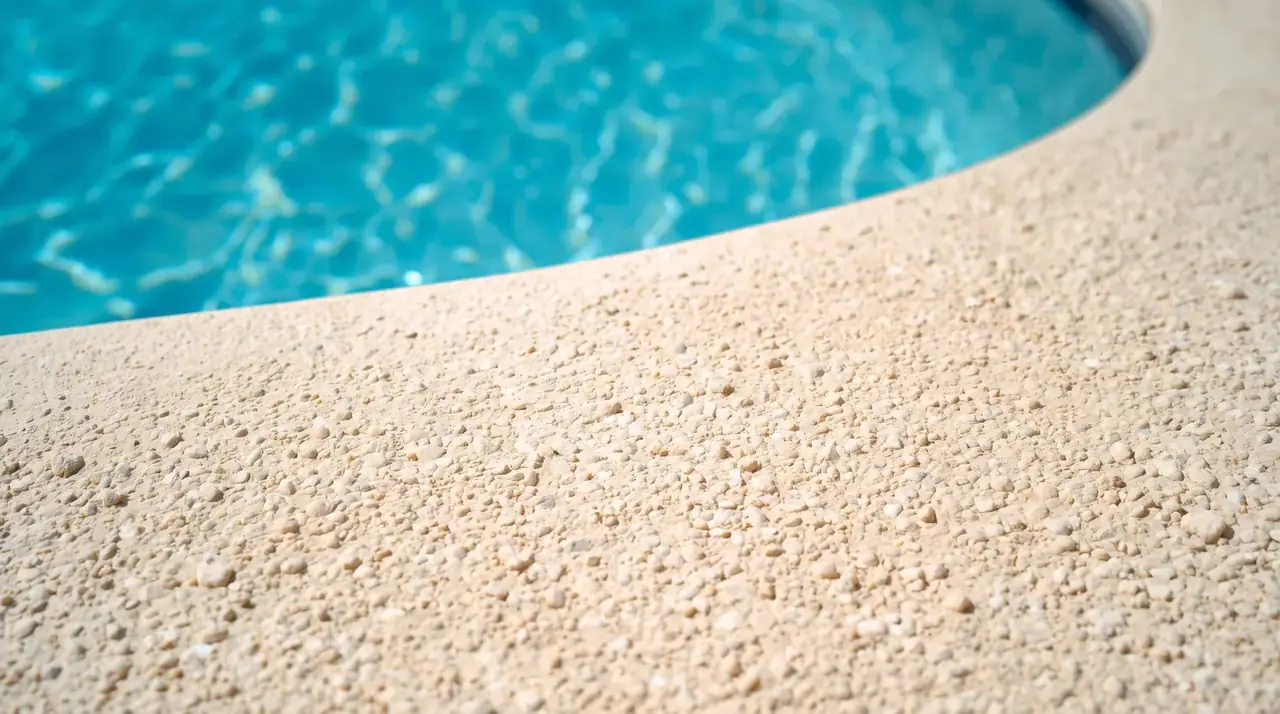
Cool deck, often called Kool Deck, is a thin textured finish sprayed or troweled over a concrete pool deck and knocked down into a flat, slightly rough pattern. Its light color is a big part of why it stays more comfortable for bare feet than plain gray concrete.
Cool deck work is a large share of pool deck resurfacing in Tampa, and the slab under a tired cool deck is often still in reasonable shape.
Why does old cool deck crack, chalk, and get rough?
Cool deck is a thin layer, so it shows everything that happens to it and under it. On Tampa Bay decks we usually see a mix of these causes:
- UV breakdown: years of Florida sun degrade the acrylic binder, so the surface fades and leaves chalk on your hand.
- Wear: foot traffic, furniture, and close-range pressure washing erode the knockdown peaks until the surface feels sharp or sandy.
- Slab movement: sandy soils, settlement, and heat expansion crack the concrete, and the cool deck cracks right along with it.
- Water and chemistry: summer storms, salt-chlorine splash-out, and standing water at low spots soften and lift the finish.
- Mildew and algae: humidity and shade, especially in screened lanais, leave dark staining in the texture.
- Past shortcuts: paint rolled over a chalky surface often peels in sheets a few seasons later.
A cool deck that scrapes toes is usually worn through its top layer, and cleaning will not make it smooth again. That is a resurfacing problem, not a maintenance one. Our guide to the signs a pool deck needs resurfacing covers what else to look for.
Can you resurface over existing cool deck, or does it need to come off?
This is the first thing we check on an inspection. We walk the deck, tap suspect areas, and look closely at edges along the coping, expansion joints, and screen enclosure posts. Well-bonded cool deck sounds solid. Delaminated cool deck sounds hollow and often lifts with a scraper.
When most of the existing layer is bonded, we remove loose patches, profile the surface so new material can grip, fill low spots, and apply a fresh acrylic cool-deck texture. That keeps the old layer working as a base and avoids the cost and dust of full removal.
When we recommend removal instead
If large areas sound hollow, the old cool deck is peeling in sheets, or there are several layers of paint and coating stacked on top of each other, a new finish has nothing reliable to bond to. Removing it down to sound concrete costs more up front, but resurfacing over a failing layer usually means the new finish fails with it.
If the slab itself has settled badly or has wide, moving cracks, see our comparison of resurfacing vs. replacement.
How are chips and cracks in cool deck repaired?
Small chips and pop-outs are patched with a compatible cementitious repair material, feathered out, and covered by the new texture. Patching only the chip usually leaves a visible spot, because old cool deck fades unevenly.
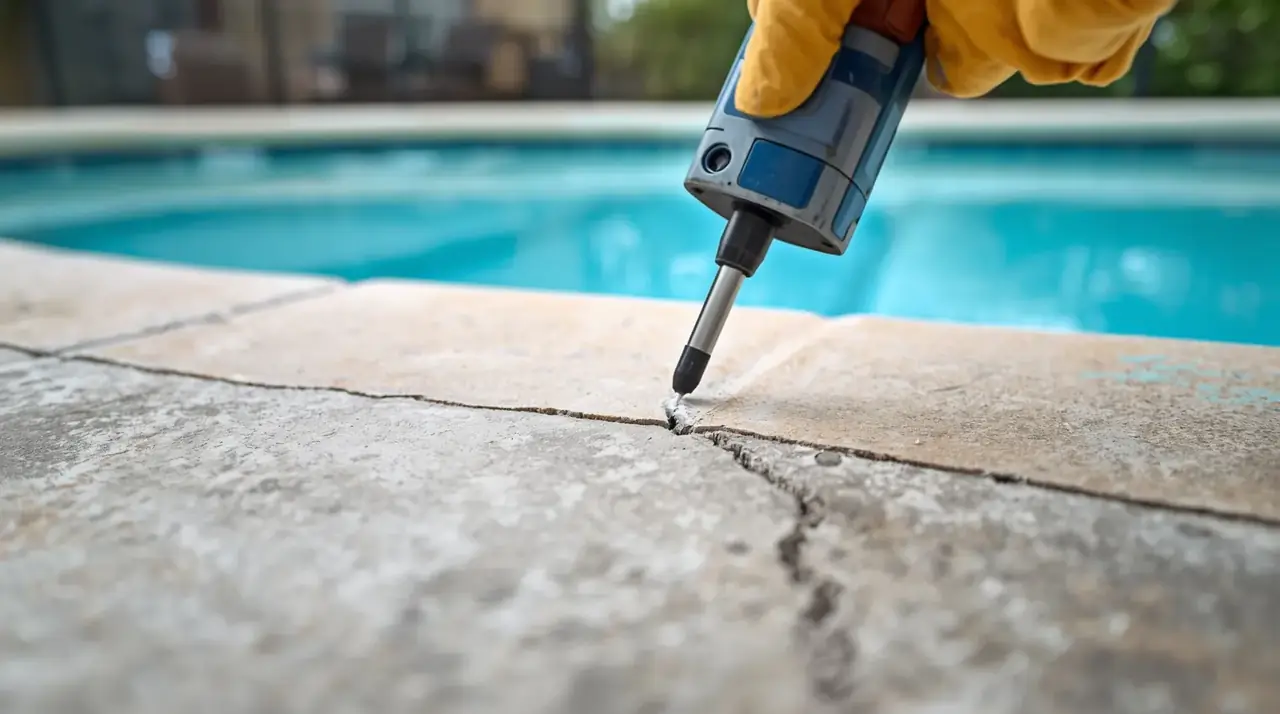
Hairline cracks can often be routed and filled before the new coat. Cracks along the coping or at control joints should be treated as joints, with a polyurethane sealant, not filled solid. Filling a working joint with rigid material just moves the crack an inch over.
Our pool deck crack repair guide covers crack types in depth. For cool deck, the key point is that repairs happen before the retexture.
What color and texture options are there for new cool deck?
Most acrylic cool-deck systems come in whites, creams, sandy tans, light grays, and soft earth tones. Lighter colors stay more comfortable in full sun, while warmer or grayer tones hide dirt and leaf staining better in heavily landscaped yards.
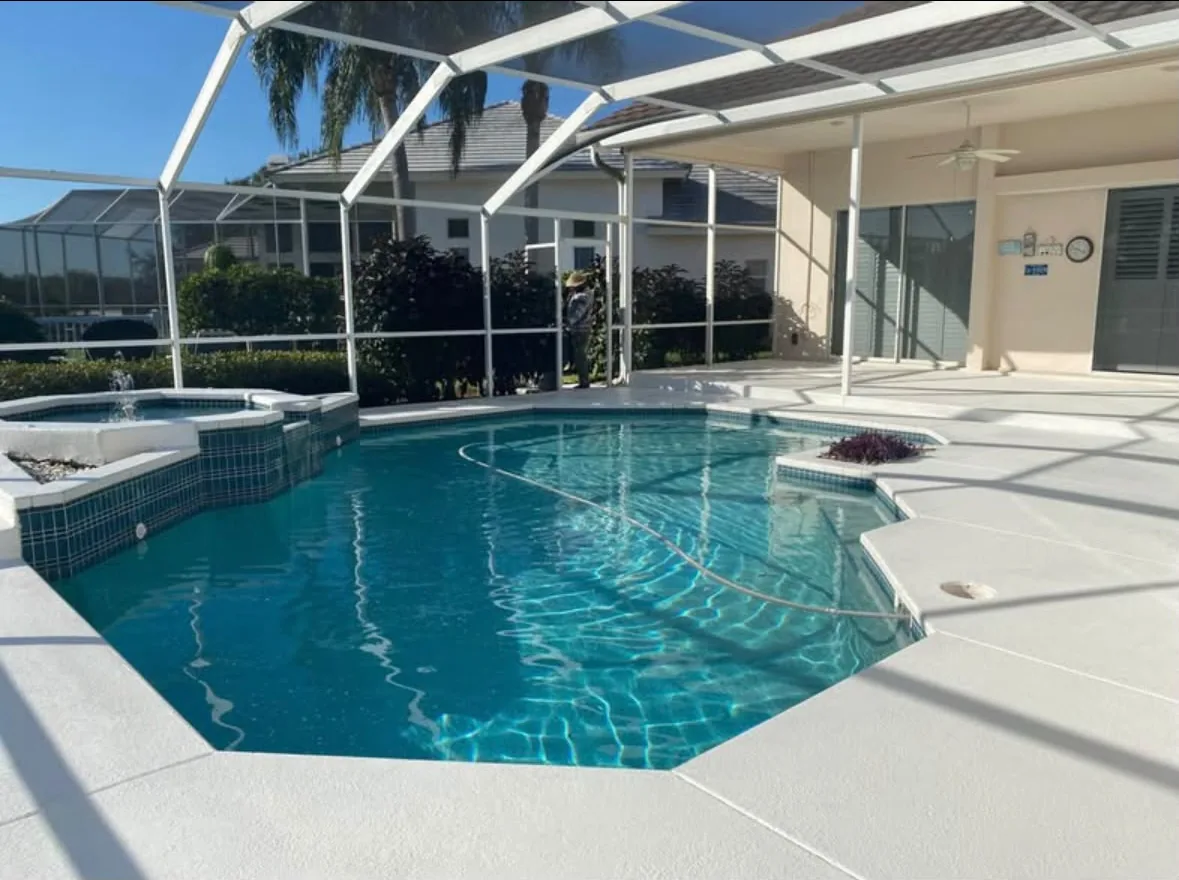
A finer knockdown feels smoother and cleans easier; a heavier one grips better but collects dirt. Near steps and spa edges we favor a texture that holds traction when wet. If you are weighing cool deck against pavers, stamped overlays, or travertine looks, see our guide on the best pool deck surface for Florida heat.
Can you just recoat or paint an old cool deck?
Sometimes. If the texture is intact and the main problem is faded or stained color, a recoat with an acrylic coating made for cool deck can bring it back. Prep matters: cleaning, mildew treatment, and removing chalk so the coating bonds instead of sitting on dust.
A recoat is the wrong purchase if the deck is rough, cracked, or peeling. Paint will not rebuild a worn texture, and coating over a delaminating layer only adds to something already letting go. If a recoat is enough, we will say so. Our article on painting vs. resurfacing a pool deck covers that decision in more detail.
When the texture itself is worn, a pool deck retexture is usually the right scope. Our online estimator starts at about $6.50/sq ft for a retexture over a sound surface; the final price depends on what the inspection finds.
How do you maintain cool deck in Florida?
A resurfaced cool deck lasts longer with a few simple habits:
- Clean it regularly, especially in shaded or screened areas where mildew builds fastest.
- Pressure wash at a safe distance and moderate pressure, since a close tip strips texture.
- Rinse salt and pool chemical splash-out instead of letting it dry on the surface.
- Reseal caulked joints at the coping and house wall when they split.
A periodic recoat, done before the surface turns chalky, is far cheaper than waiting until the texture wears through. For realistic timelines, see how long pool deck resurfacing lasts.
Getting your cool deck looked at
Pool Decks of Tampa is a family-owned, State Certified Specialty Contractor, licensed and insured, serving Hillsborough, Pinellas, Pasco, and Manatee counties. Cool deck repair is one of the most common jobs in our pool deck resurfacing services, and most residential projects take two to five days depending on scope. Every deck restoration includes a written warranty.
The fastest way to an honest answer on recoat vs. retexture vs. removal is to send photos for a free estimate, with a wide shot plus close-ups of cracks and peeling areas. We then schedule a free on-site inspection to confirm what the old cool deck can support. You can also call (813) 553-5620, or read more about Tampa pool deck resurfacing on our homepage.
Frequently asked questions
›Is cool deck the same as Kool Deck?
Mostly, yes. Kool Deck is a brand name, and people in Florida use it the way they use a brand name for tissues. Cool deck is the general category: a thin, light-colored textured finish applied over a concrete pool deck. Different manufacturers make similar acrylic and cement-based systems, and the repair and resurfacing approach is largely the same across them.
›Can new cool deck go over old cool deck?
Usually, if the old layer is still bonded to the concrete. We tap the deck to find hollow spots, remove anything loose, repair cracks, and profile the surface so the new texture can grip. If much of the old layer sounds hollow or is peeling, it needs to come off first, because a new finish is only as secure as what it is bonded to.
›Why is my cool deck rough on my feet?
Roughness usually means the top of the texture has worn away from sun, foot traffic, or aggressive pressure washing, leaving exposed sand and aggregate. Cleaning will not make it smooth again, and a thin coat of paint rarely helps for long. A retexture rebuilds the knockdown surface with fresh material so it is comfortable underfoot again.
›Will cracks come back after cool deck is resurfaced?
They can if the cause is still active. Hairline cracks that are properly routed and filled before resurfacing usually stay hidden. Cracks from ongoing settlement or a working joint can telegraph through any thin finish. That is why joints get a flexible polyurethane sealant and larger moving cracks get evaluated as a slab issue before the new texture goes on.
About Pool Decks of Tampa
We are a family-owned crew that resurfaces, repairs, and restores pool decks across Hillsborough, Pinellas, and Pasco counties. We are a State Certified Specialty Contractor, licensed and insured, and every deck restoration comes with a written warranty. These guides come from the questions homeowners ask us during inspections. See our pool deck resurfacing work in Tampa, read customer reviews, or verify any Florida contractor license.