Pool deck guide
Slippery Pool Deck? How to Make a Pool Deck Less Slippery
Why pool decks get slippery in Florida and how to fix it, from cleaning and anti-slip sealer additives to stripping glossy sealer, retexturing, or an overlay.
By the Pool Decks of Tampa crew · Published · 7 min read
Quick answers
- Most slippery pool decks are caused by a glossy film-forming sealer, worn-down texture, or an algae and mildew film, not by the concrete itself.
- Start with the cheapest fix that matches the cause: a thorough cleaning, then an anti-slip additive in the sealer, then stripping a glossy sealer.
- If the texture is worn smooth or the deck was troweled slick, a retexture or overlay is the lasting fix.
- Avoid DIY paint and adhesive grip tape on a pool deck; both tend to peel in Florida sun and rain and can make the problem worse.
Why is my pool deck so slippery?
A pool deck gets slippery when the surface loses its texture or gets covered by something smooth, usually a glossy sealer or a thin film of algae and mildew. The fix depends on which one you have, and the cheapest options often work if you catch the cause early.
On Tampa Bay decks we usually see one or more of these causes during an inspection:
- Glossy film-forming sealer: acrylic sealers that dry to a wet look sit on top of the surface like a clear coat. Wet, they can feel like ice, especially on pavers and stamped concrete.
- Worn texture: foot traffic, pressure washing, and years of UV wear down cool deck and knockdown textures until high-traffic paths and steps are smooth.
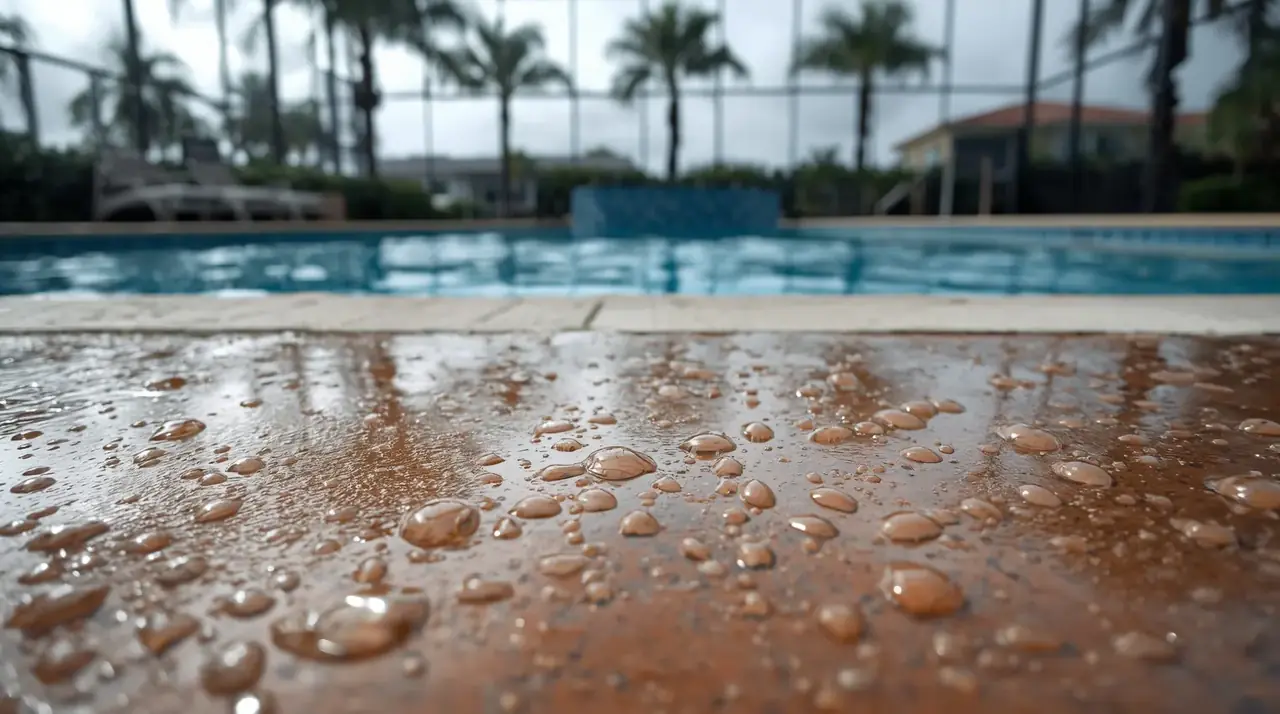
- Algae and mildew film: shaded areas under a screened lanai, along screen walls, and near downspouts stay damp and grow a green or black film that is slick when wet.
- Smooth troweled concrete: some decks were finished with a steel trowel and never given a broom or textured finish.
- Polished or sealed pavers: some paver surfaces are naturally smooth, and adding a high-gloss sealer makes them worse.
Before choosing a fix, wet the deck with a hose and walk it barefoot, carefully. Note where it is slick and whether those areas are shaded, glossy, or simply worn. That map tells you a lot. If you want a second opinion, it is a normal part of how we approach pool deck resurfacing in Tampa.
Fix 1: Can cleaning make a pool deck less slippery?
Often, yes. If the slick areas are in shade or show a green, grey, or black tint, the problem may be biological growth rather than the surface itself. Florida humidity and summer afternoon thunderstorms keep shaded concrete damp for long stretches, which is ideal for algae and mildew.
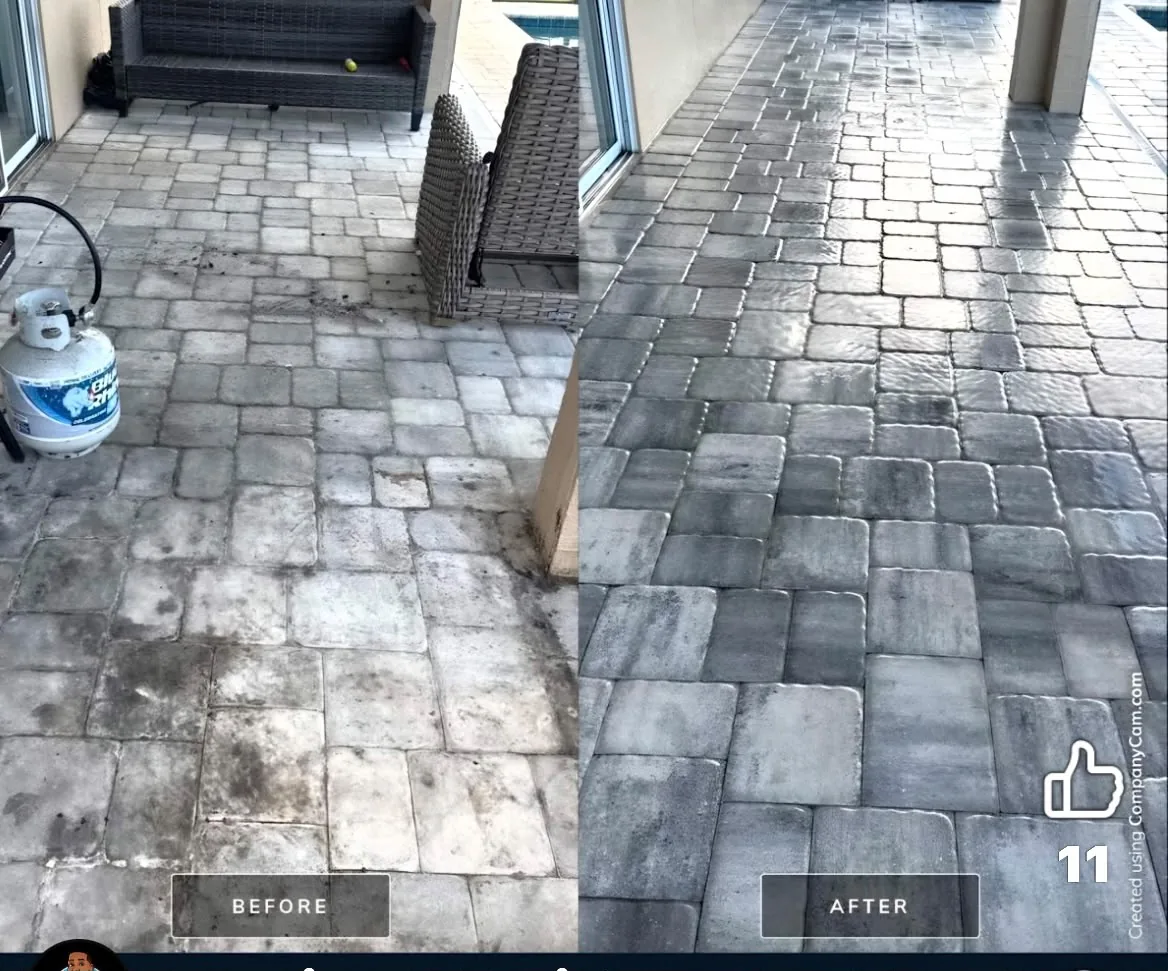
A proper cleaning with a suitable cleaner and controlled pressure removes that film. Too much pressure up close can etch cool deck texture or strip sealer unevenly.Our pool deck pressure washing service is set up for coated and decorative surfaces. If the deck is still slick after it is truly clean, the cause is the finish, and you can move to the next fix.
Fix 2: Does anti-slip additive in sealer work?
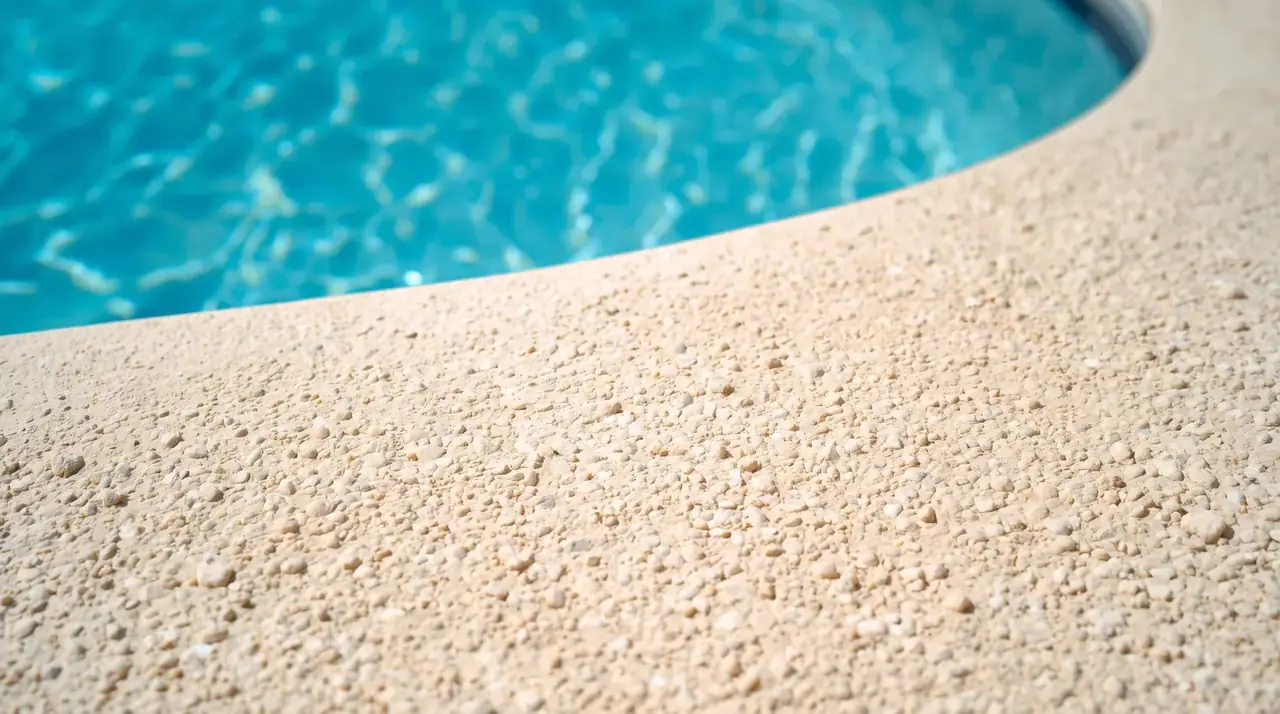
For sealed pavers, stamped concrete, and decorative overlays, adding a fine anti-slip grit to the sealer is the most common fix. The grit is mixed in or broadcast into the wet sealer, leaving a slightly sandpapery feel that grips bare feet gently.
It only works if the new sealer is compatible with what is already on the deck and the surface is clean and dry when it goes on. Grit also wears with traffic, so it needs to be renewed each time the deck is resealed. Our guide to pool deck sealing in Tampa covers when sealing helps and when it does not.
Fix 3: Should you strip a glossy sealer off a pool deck?
If the deck was coated with a high-gloss, wet-look sealer and it is slippery even with grit, stripping is often the right call. Layers of glossy sealer build up over the years, and each new coat on top makes the surface smoother.
Stripping uses a chemical stripper and rinsing, or light mechanical prep, to remove the film. After that, the deck can be resealed with a penetrating sealer, which soaks in rather than forming a film, or with a low-sheen sealer plus grit. Penetrating sealers keep the natural texture of the surface and are usually the better choice around a pool, though they do not give a wet look.
The trade-off with wet-look finishes
A wet-look sealer makes pavers and stamped concrete look rich, and many homeowners love it. Around a pool it is a safety trade-off. If you want some sheen, ask for a satin finish with anti-slip grit and test a small area wet before doing the whole deck.
Fix 4 and 5: When do you need a retexture or an overlay?
When the problem is the surface itself, worn-smooth cool deck, steel-troweled concrete, or a texture that has been pressure washed flat, no sealer will fully fix it. The deck needs new texture.
A pool deck retexture applies a fresh knockdown texture and acrylic finish over a sound slab. It restores grip, freshens the color, and is generally cooler underfoot than a sealed stamped surface. Our online estimator starts at about $6.50 per square foot for a retexture over a sound surface, and the final price depends on inspection, including crack repair and removal of any failing coating.
An overlay is the more involved option, used when you also want a new look such as slate or stone. It is thicker and needs a stable slab underneath. Our guide to a stamped concrete pool deck overlay explains when that makes sense. Both options are part of our pool deck resurfacing services, and we will tell you if a simpler fix is enough.
What should you avoid on a slippery pool deck?
- DIY deck paint: most paints form a smooth film that gets slick when wet, and in Florida sun and rain they tend to peel, trapping moisture and creating new slippery, flaking patches.
- Adhesive grip tape and stick-on treads: they lift at the edges in heat and pool water, collect dirt and mildew, and become a trip hazard.
- Another coat of glossy sealer: adding sealer over a slick deck usually makes it worse, not better.
- Ignoring drainage: puddles that sit near the house or pool edge grow algae and stay slick, so the low spot needs attention, not just the surface.
How do you make a pool deck safer for kids and older adults?
Kids run, and older adults may have less balance or slower reactions, so the areas that matter most are steps, the path from the house to the pool, the spa edge, and anywhere water drips off swimmers. Prioritize traction in those spots even if the rest of the deck is fine.
- Choose a textured, matte finish over a glossy one for the whole deck if anyone in the home is at higher risk of falling.
- Clean shaded and screened areas more often during the rainy season, when algae grows fastest.
- Consider a handrail at pool and spa steps; it does more for safety than any surface change alone.
No surface makes a wet deck slip-proof. The goal is a finish that grips well when wet and is easy to keep clean, combined with sensible habits around the water.
Get a slippery pool deck checked
We are a family-owned State Certified Specialty Contractor, licensed and insured, serving Tampa Bay from St. Petersburg to Wesley Chapel and Lakewood Ranch. On a free on-site inspection we identify the cause first, then recommend the least involved fix that will actually work.
To start, send photos for a free estimate, including close-ups of the slick areas and a wide shot showing shade and drainage, or call (813) 553-5620. If your deck needs more than a cleaning or a new sealer, we can walk you through resurfacing a pool deck in Tampa Bay and what it would involve.
Frequently asked questions
›What is the best non-slip surface for a pool deck in Florida?
A textured acrylic finish such as a knockdown or cool deck surface, often called Kool Deck, is a common choice because it grips when wet and stays relatively cool. Stamped overlays and pavers can also work well if they are sealed with a low-sheen sealer and anti-slip grit rather than a high-gloss product.
›Why did my pavers get slippery after sealing?
Most likely the sealer was a film-forming, wet-look product applied without anti-slip grit, or it was applied too heavily and pooled on the surface. The fix is usually stripping the glossy layer and resealing with a penetrating sealer or a satin sealer with grit added. Test a small area wet before treating the whole deck.
›Can I just add sand to my pool deck sealer?
Ordinary sand is too coarse and uneven, and it can wear off quickly or feel rough on bare feet. Use an anti-slip additive made for sealers, typically a fine polymer or aluminum oxide grit, and follow the sealer maker’s instructions on how much to use. Compatibility with the existing sealer matters too.
›Is pressure washing enough to fix a slippery pool deck?
It is enough when the slickness comes from algae, mildew, or dirt. It will not fix a glossy sealer or worn-smooth texture, and aggressive pressure washing can actually wear texture down further. If the deck is still slippery once it is fully clean and dry, the finish itself needs attention.
›How much does it cost to fix a slippery pool deck?
It ranges widely by cause. Cleaning and resealing with grit is the lower end, while a retexture or overlay costs more. Our online estimator starts at about $6.50 per square foot for a retexture over a sound surface, and the final price depends on an inspection of your deck.
About Pool Decks of Tampa
We are a family-owned crew that resurfaces, repairs, and restores pool decks across Hillsborough, Pinellas, and Pasco counties. We are a State Certified Specialty Contractor, licensed and insured, and every deck restoration comes with a written warranty. These guides come from the questions homeowners ask us during inspections. See our pool deck resurfacing work in Tampa, read customer reviews, or verify any Florida contractor license.