Pool deck guide
How Long Does Pool Deck Resurfacing Last in Florida?
How long pool deck resurfacing lasts in Florida depends on the system, prep, slab movement, sun, and upkeep. What shortens it, upkeep, and when to reseal.
By the Pool Decks of Tampa crew · Published · 7 min read
Quick answers
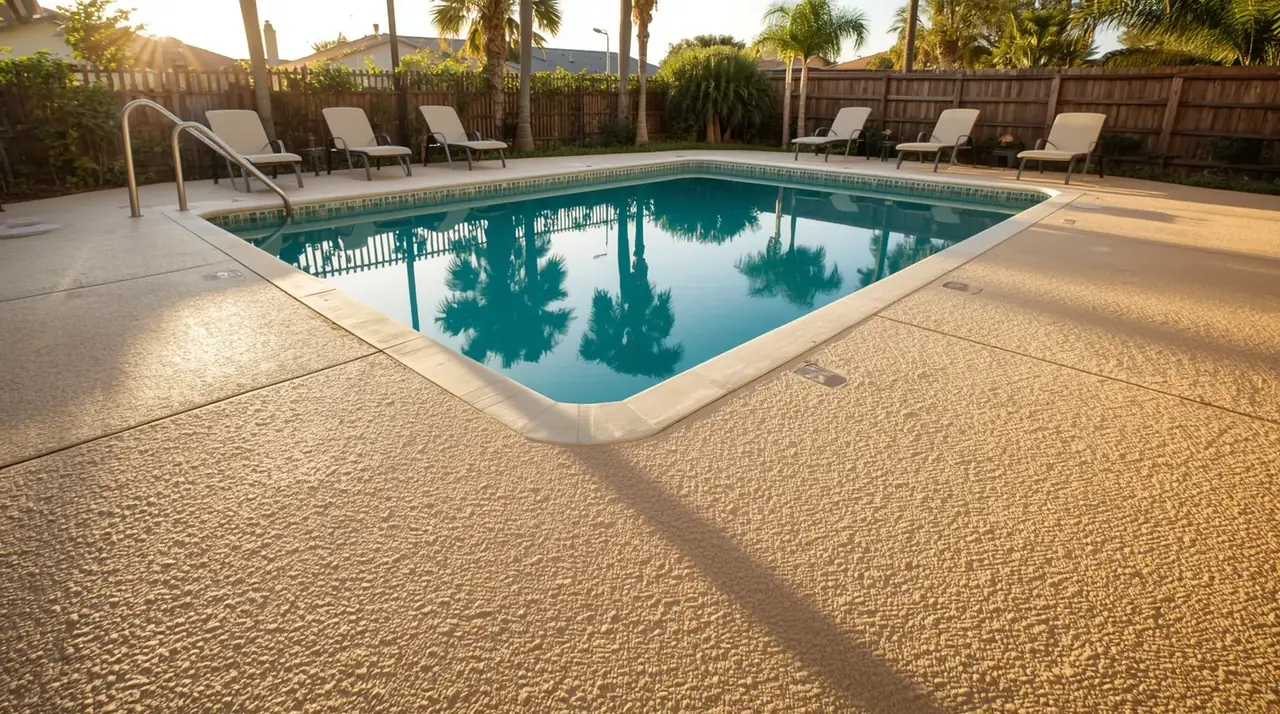
- There is no single lifespan for pool deck resurfacing; it depends on the system installed, the quality of prep, slab movement, sun exposure, and maintenance.
- In Florida, UV, pool chemicals, aggressive pressure washing, poor drainage, furniture dragging, and unrepaired cracks shorten a finish’s life the most.
- The topcoat and sealer are the wear layers, and resealing is commonly needed every few years depending on product and exposure, so follow the manufacturer.
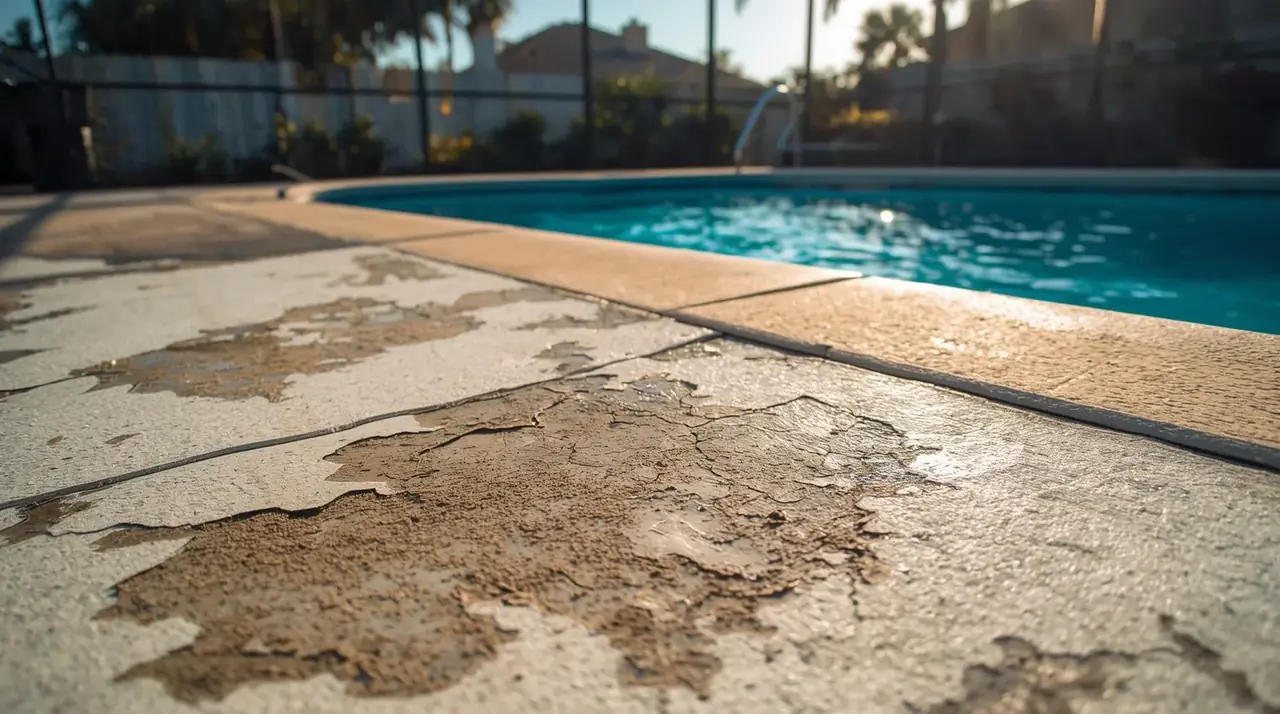
- Fading and dullness usually mean reseal; peeling, hollow spots, and cracks running through the finish usually mean repair or redo.
How long does pool deck resurfacing last?
Honestly, it depends. A resurfaced pool deck can last many years when it goes over a stable slab with good prep and gets resealed on schedule, and it can fail early when any of those pieces are missing. Anyone who quotes you one exact number without seeing your deck is guessing.
As a loose industry rule of thumb, the underlying texture or overlay is expected to outlast the color coat and sealer, which are the parts that wear and get renewed. Real-world results vary widely. When we quote pool deck resurfacing in Tampa, we explain which layer is likely to need attention first and why.
What determines how long a resurfaced deck lasts?
Five things do most of the work:
- The system. A thin acrylic cool deck texture, a polymer-modified cementitious overlay, and a stamped overlay are built differently and wear differently. Thicker systems generally tolerate more abuse but cost more.
- Prep. A new finish bonded to clean, sound concrete holds. One bonded to old paint, chalky coating, or mildew film fails along with whatever it sits on.
- Slab movement. Sandy Florida soils settle, and a slab that keeps moving will crack any surface placed on it.
- Sun exposure. A deck in full sun ages faster than one under a screened lanai roof or shade.
- Maintenance. Regular cleaning and timely resealing protect the wear layer before damage reaches the texture.
Of these, prep and slab movement are the ones you can’t fix later without starting over. That is why what we check first on an inspection is whether the existing surface is bonded and whether cracks are still moving. It is also why careful Tampa pool deck resurfacing spends more time on preparation than on color. Our walkthrough of the pool deck resurfacing process shows where each step fits.
What shortens the life of a pool deck finish in Florida?
On Tampa Bay decks we usually see the same culprits behind early wear:
- UV. Intense, year-round sun breaks down sealers and fades color coats, especially on south- and west-facing decks.
- Pool chemicals. Splash-out from chlorine and salt-chlorine pools leaves residue and salt along the coping that wears sealer faster there than anywhere else.
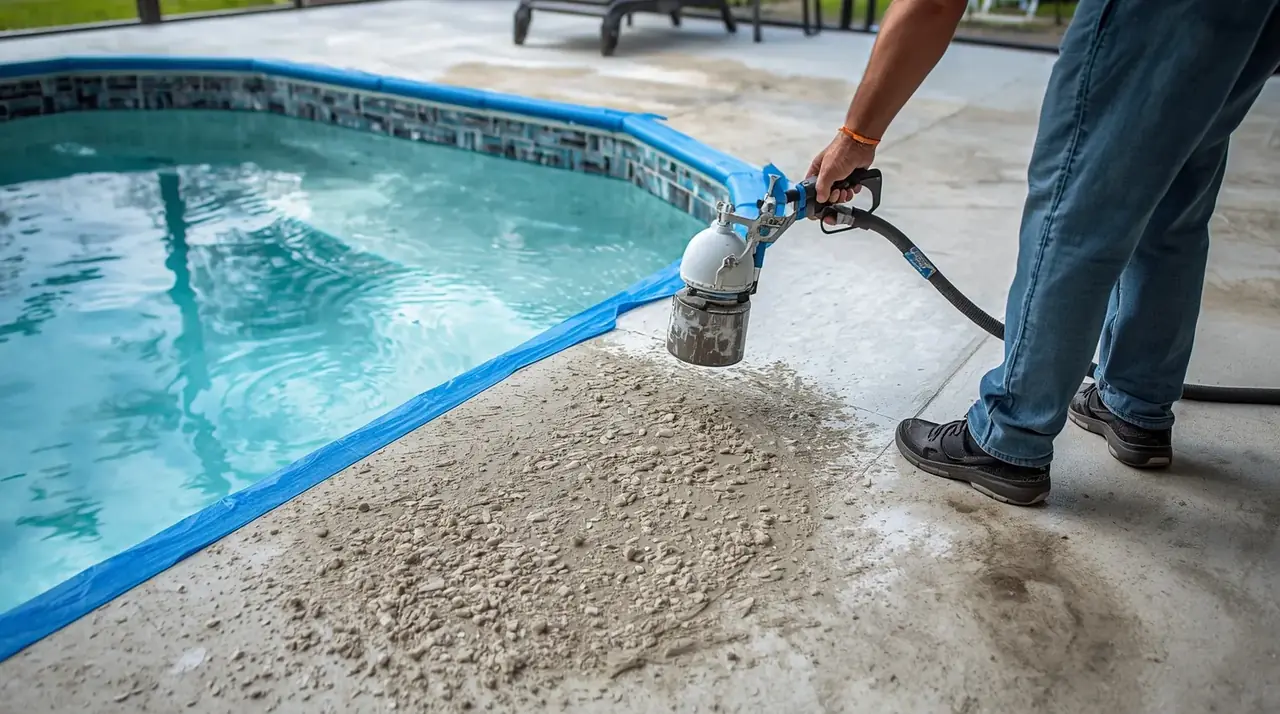
- Aggressive pressure washing. A zero-degree tip or a nozzle held too close can strip sealer and etch texture in a single afternoon.
- Poor drainage. Water that sits in low spots feeds algae and mildew, and repeated soaking is hard on coatings.
- Furniture dragging. Metal chair feet and heavy loungers scuff through topcoats, leaving bare paths.
- Unaddressed cracks. A crack left open lets water under the finish, and the edges start to lift.
The gentle way to pressure wash
If you pressure wash a coated deck, use a wide fan tip or a surface cleaner, keep the wand moving, and stay well back from the surface. Soft washing with a deck-safe cleaner is often enough for mildew. If you’re unsure, ask about our pool deck pressure washing, done at pressures the finish can take.
How should you maintain a resurfaced pool deck?
Maintenance is simple, but it has to actually happen. A practical schedule for most Tampa Bay decks looks like this:
- Weekly or as needed: sweep or blow off leaves and sand, and rinse splash-out near the coping, especially with a salt pool.
- Every few months: a gentle wash with a mild, deck-safe cleaner to keep mildew and algae from rooting in shaded corners.
- After hurricane-season storms: clear debris and check drains so water isn’t pooling on the surface.
- Resealing: commonly every few years, depending on the product and how much sun and pool water the deck sees. Follow the manufacturer’s instructions for your system.
- Any time: fix new cracks early and put pads or glides on furniture feet.
Sealer choice matters too. Film-forming sealers give more surface protection but show wear and need recoating; penetrating sealers change the look less and wear differently. Ask which type your deck has before buying a sealer off the shelf, since some products don’t bond over others.
Is it time to reseal or redo the deck?
Most decks give clear signals. Resealing is usually enough when the surface is still bonded and you mainly see:
- Faded or uneven color, especially in the sunniest areas.
- A dull, chalky surface that rubs off on your hand.
- Water soaking in quickly instead of beading.
- Stains or mildew that come back soon after cleaning.
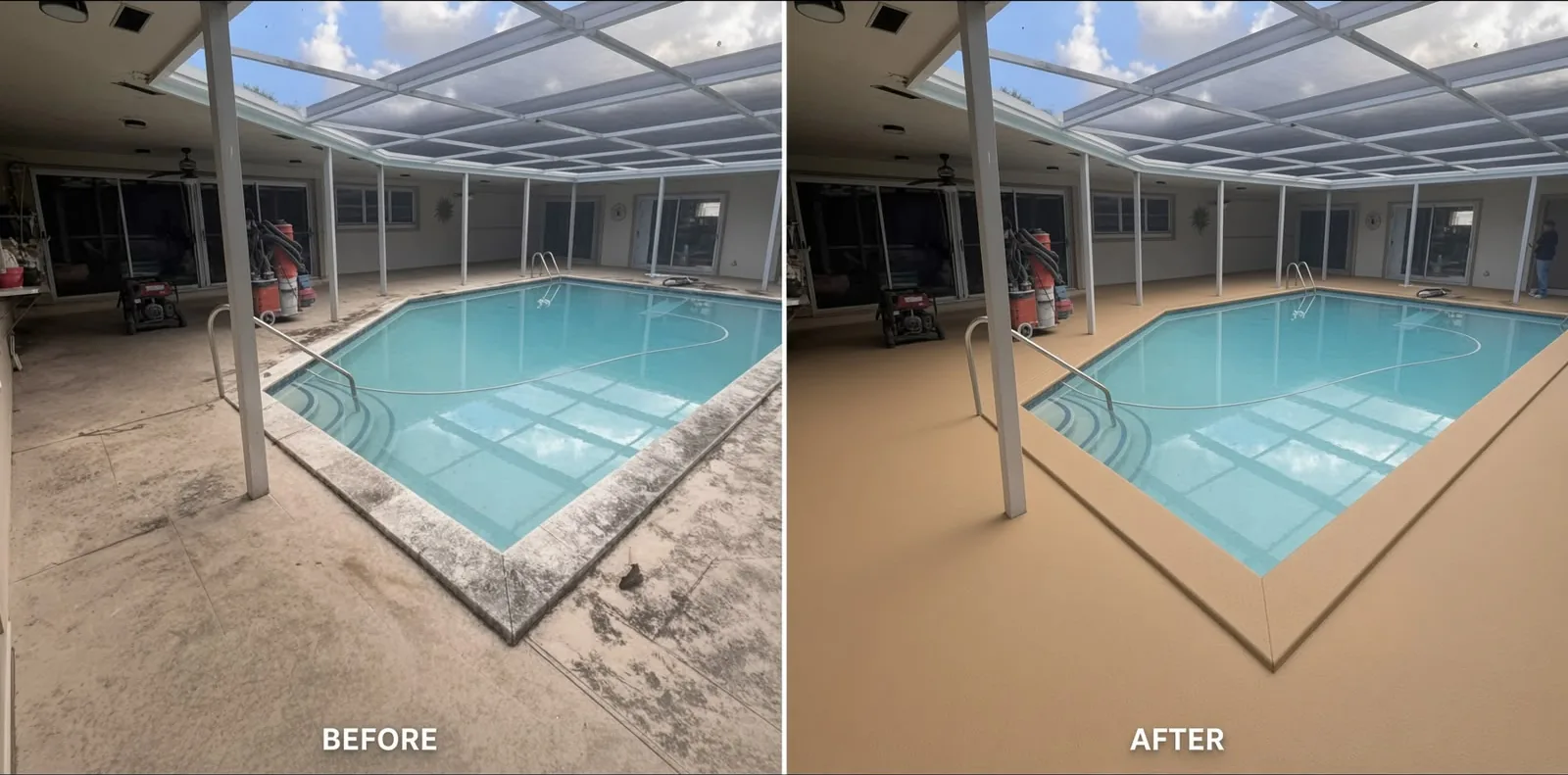
A retexture or bigger repair is more likely when you see peeling or flaking, hollow-sounding areas when tapped, texture worn down to bare concrete, or cracks running through the finish with raised edges. If the slab is sound and the problem is a worn surface, a pool deck retexture is often the right scope. If you are not sure which bucket your deck is in, our list of signs your pool deck needs resurfacing goes deeper.
How do pool deck resurfacing warranties work?
Warranties vary between contractors and products, so read the actual document rather than the sales pitch. In general, a contractor’s workmanship warranty covers installation problems such as delamination or peeling caused by poor prep or application. Material warranties, when they exist, come from the manufacturer and have their own terms.
Most warranties exclude things outside the installer’s control: new cracks from slab settlement or tree roots, damage from aggressive pressure washing or harsh chemicals, and wear from skipping recommended resealing. Ask what is covered, what voids it, and whether maintenance has to be documented. Every Pool Decks of Tampa deck restoration includes a written warranty, and we walk through its terms before work starts.
Want an honest read on your deck’s remaining life?
The fastest way to know whether you need a reseal, a retexture, or a full restoration is to have someone look at the slab. Our online estimator starts at about $6.50 per sq ft for a retexture over a sound surface; the final price depends on inspection.
Pool Decks of Tampa is family-owned, licensed and insured, and serves Tampa, St. Petersburg, Clearwater, Brandon, Wesley Chapel, Riverview, Lakewood Ranch, and Safety Harbor. See our Tampa pool deck resurfacing services, then send photos for a free estimate or call (813) 553-5620 to set up a free on-site inspection.
Frequently asked questions
›How often should a resurfaced pool deck be resealed?
Commonly every few years, but it depends on the sealer, how much direct sun the deck gets, and how much pool water splashes onto it. A shaded deck under a screened lanai roof may go longer than an open deck in full sun. Follow the manufacturer’s recommendation for your system and reseal when color fades or water stops beading.
›Does a screened lanai make a pool deck finish last longer?
Often, yes. A screen enclosure filters some sun and keeps out leaves and debris, so the sealer and color coat usually wear more slowly. Screened decks can trade that for more mildew in shaded, humid corners, so regular gentle cleaning still matters. Enclosure post bases are also worth checking for cracks.
›Can I pressure wash my resurfaced pool deck?
Yes, carefully. Use a wide fan tip or a surface cleaner, keep the wand moving, and stay back from the surface. High pressure held close can strip sealer and etch the texture, and damage from aggressive washing is commonly excluded from warranties. For routine mildew, soft washing with a deck-safe cleaner is often enough.
›Do salt water pools shorten the life of a pool deck coating?
They can. Salt-chlorine pools leave salt residue where water splashes out, and as it dries and builds up it wears sealer along the coping faster than elsewhere. Rinsing that zone with fresh water regularly and keeping the sealer current go a long way. A deck around a salt pool may need resealing sooner near the edge.
›Will cracks come back after resurfacing?
They can if the slab is still moving. Resurfacing renews the surface, but it does not stop settlement in sandy soil or movement at the pool beam. Proper crack repair and a flexible sealant at the coping joint help a lot. If a crack is active, the cause needs to be understood before any finish is applied.
About Pool Decks of Tampa
We are a family-owned crew that resurfaces, repairs, and restores pool decks across Hillsborough, Pinellas, and Pasco counties. We are a State Certified Specialty Contractor, licensed and insured, and every deck restoration comes with a written warranty. These guides come from the questions homeowners ask us during inspections. See our pool deck resurfacing work in Tampa, read customer reviews, or verify any Florida contractor license.