Pool deck guide
The Pool Deck Resurfacing Process: How Is a Pool Deck Resurfaced, Step by Step?
How a pool deck is resurfaced in Tampa Bay, step by step: inspection, prep, crack repair, base coat, texture, sealer, cure times, and storm delays.
By the Pool Decks of Tampa crew · Published · 7 min read
Quick answers
- A pool deck is resurfaced in layers: inspect, protect, clean, remove failing coating, repair cracks and joints, base coat, texture, color or topcoat, then sealer.
- Surface preparation, not the final color, decides how well a new finish bonds and how long it holds up.
- Typical residential jobs take 2–5 days depending on scope, and Tampa’s afternoon thunderstorms can push a step to the next day.
- Cure times come from the product being installed, so ask your crew when you can walk, swim, and put furniture back before work starts.
How is a pool deck resurfaced?
A pool deck is resurfaced by cleaning and preparing the existing concrete, repairing cracks and joints, then building a new surface in layers: a bonding base coat, a texture, a color or topcoat, and a protective sealer. Most of the real work happens before any new color goes down.
Below is the sequence our crews follow for pool deck resurfacing in Tampa, step by step, plus what you can expect on each day. Exact products and timing vary by deck, so treat this as a guide to the conversation with your contractor, not a fixed schedule.
What happens during the inspection?
Every job starts with a walk of the whole deck. What we check first on an inspection is whether the existing surface is still bonded. We tap and sound it for hollow spots, look for coating that peels or powders, and note every crack, along with whether its edges sit level or one side has dropped.
We also look at drainage, low spots that hold water, the expansion joint along the coping, screen-enclosure post bases, and how the deck meets the house. On Tampa Bay decks we usually see settlement over sandy soil near the pool beam and mildew in shaded corners of screened lanais.
This is also where an honest crew tells you if resurfacing is the wrong answer. A slab that is still moving, badly heaved, or broken into loose sections may need repair or replacement first. We would rather say so up front than sell a finish that cracks within a season. When the slab is a good candidate, resurfacing a pool deck in Tampa Bay is usually far less disruptive than tearing it out.
How do crews protect the pool, screen, and landscaping?
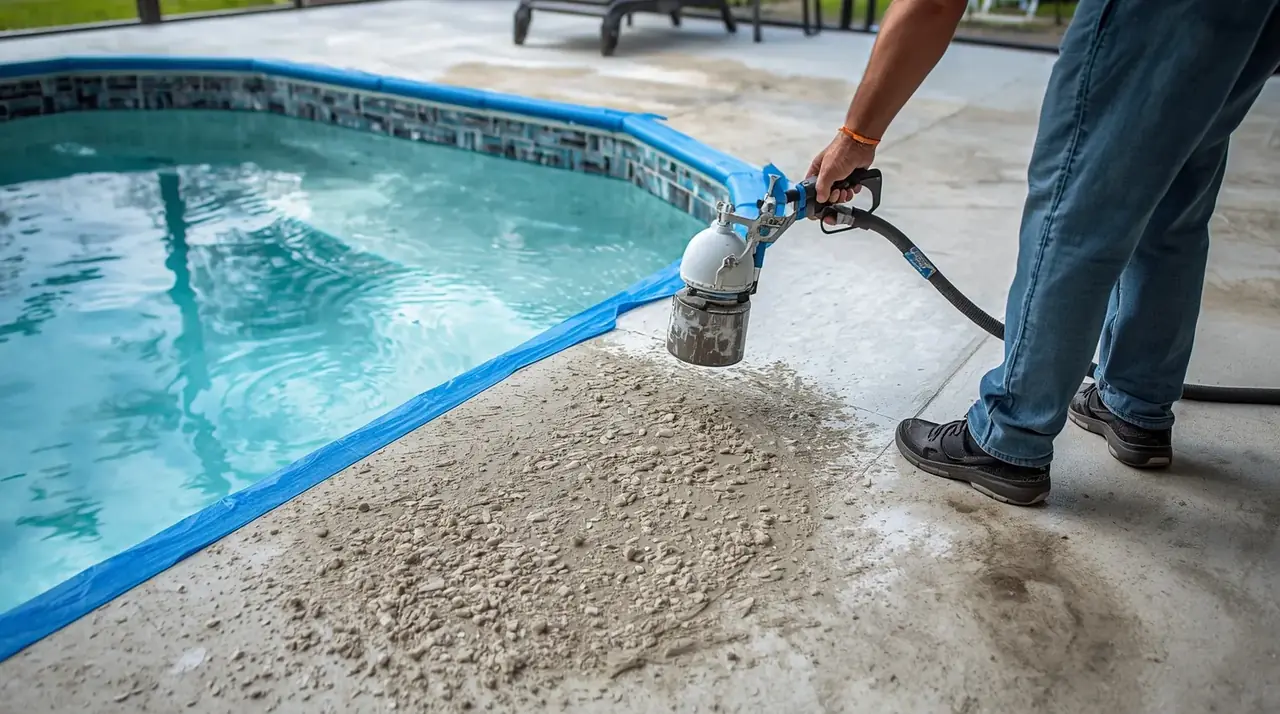
Before any pressure washing or grinding, the crew masks off what should not get material on it. That usually means taping the waterline tile and coping edge, covering pool equipment and drains, wrapping screen-enclosure posts and door bottoms, and covering plants and beds near the deck edge.
Wash water and overspray need somewhere to go, so ask how your contractor keeps them out of the pool and off the house.
What does surface preparation involve?
Preparation is the step that decides whether the new surface stays put. It usually runs in this order:
- Pressure washing to strip dirt, algae, mildew, chalky old coating, and pool-chemical residue.
- Removing failing coating. Anything peeling, hollow, or loose is scraped, ground, or otherwise taken off. A new layer can only be as strong as what it sits on.
- Opening the surface where needed. Glossy or sealed concrete may need light grinding so the base coat has something to grip.
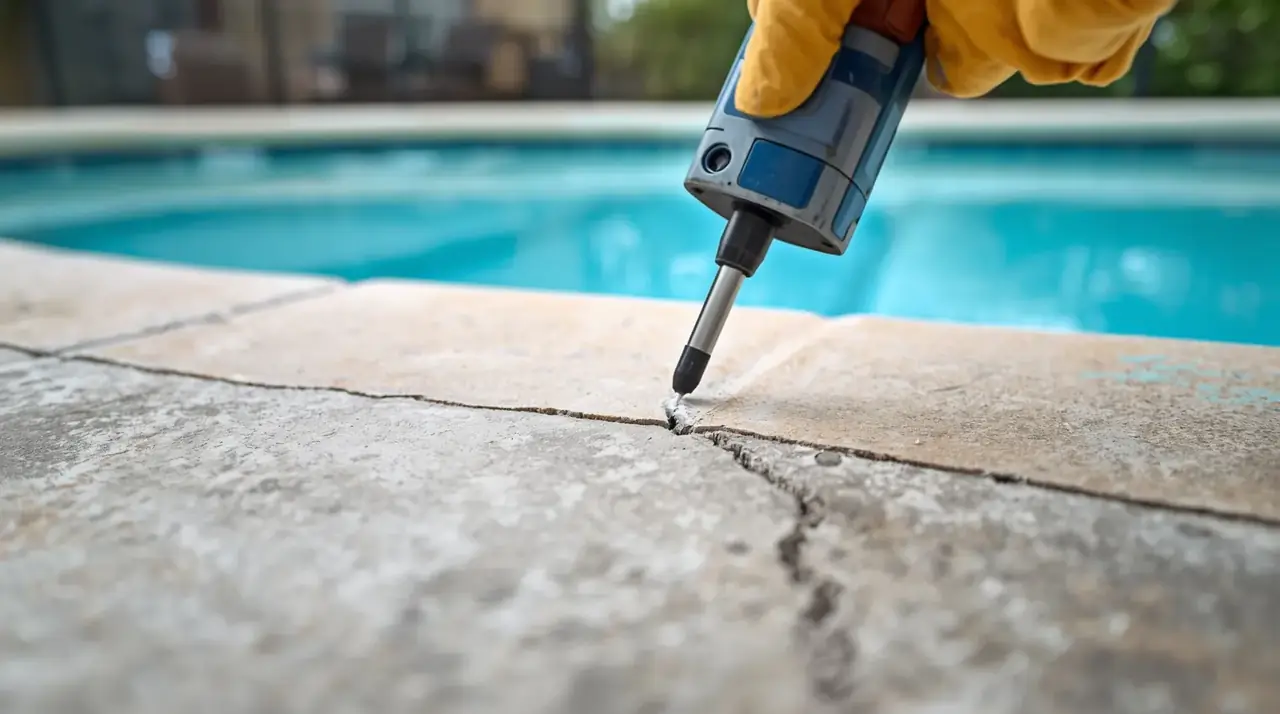
- Crack and joint repair. Cracks are routed and filled or, on structural repairs, stitched; damaged spalls are patched; and the joint at the coping is cleaned out for a flexible polyurethane sealant rather than being coated over.
When epoxy injection makes sense and when a crack will come back is covered in our pool deck crack repair guide.
Why we don’t coat over the coping joint
The joint between the deck and the pool coping moves as the slab and pool shell expand and contract. Coating straight across it almost guarantees a crack line. A flexible sealant in that joint lets the two pieces move without tearing the new surface.
How are the base coat, texture, and color applied?
With the slab clean and repaired, the new surface goes on in layers. The base coat is typically a polymer-modified cementitious material troweled or squeegeed over the deck. It evens out repairs and gives the texture a uniform surface to bond to.
Texture comes next, and this is the part you will see and feel every day:
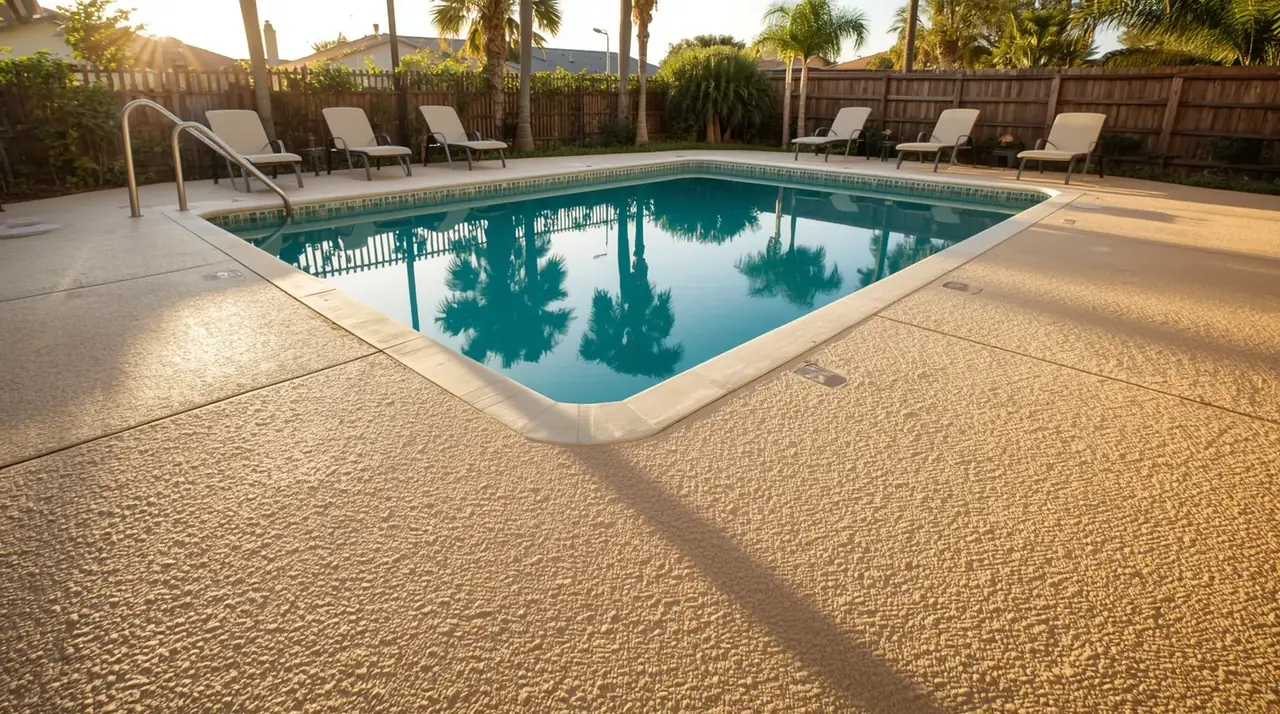
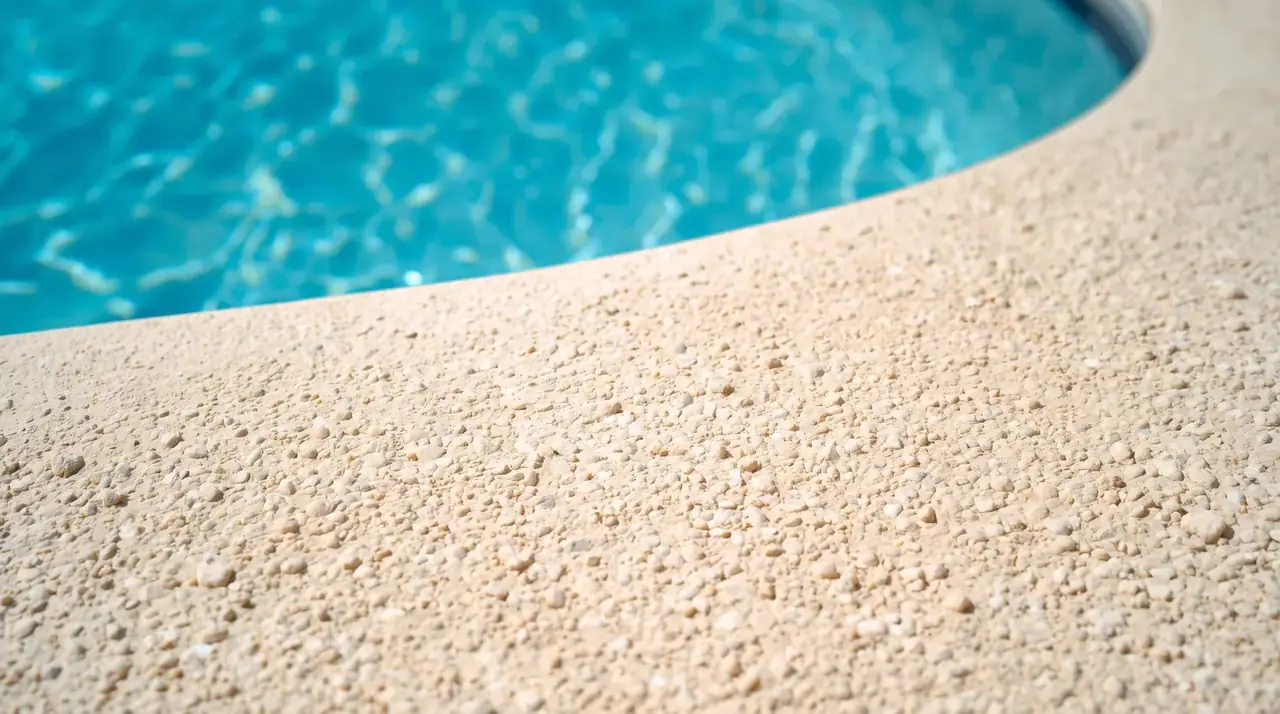
- Knockdown texture: material is sprayed on in splatters, then lightly troweled flat on top. This is the common cool deck look and stays cooler underfoot than smooth surfaces.
- Spray texture: a finer sprayed pattern left un-knocked, giving more grip and a slightly rougher feel.
- Stamped overlay: A thicker overlay pressed with mats to look like stone, slate, or tile.
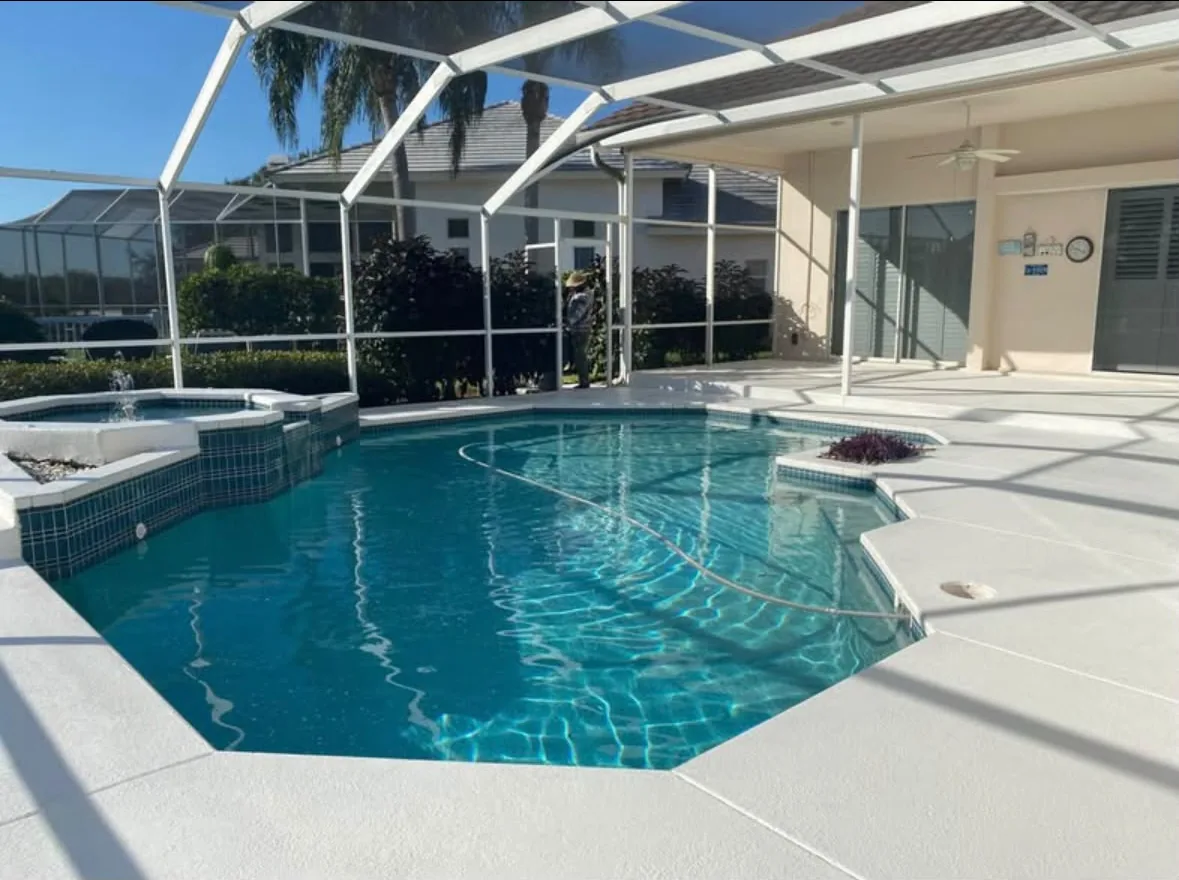
Once the texture has set, the color or topcoat is applied, usually an acrylic coating in the chosen shade. Lighter colors tend to stay more comfortable for barefoot traffic in full Florida sun, which is one reason white and light tan cool deck finishes are so common here.
Does a resurfaced pool deck need a sealer?
Most systems finish with a sealer. A film-forming sealer adds a protective layer on top that helps resist stains and UV fading, while a penetrating sealer soaks in and changes the look less. Some crews add a fine anti-slip additive for wet traction.
Sealer is also the layer you renew over the years. How often depends on the product and how much sun and pool water the deck sees; our guide on how long pool deck resurfacing lasts covers maintenance in more depth.
How long until you can walk, swim, and put furniture back?
Typical residential jobs take 2–5 days depending on scope.
Cure times are set by the product’s manufacturer and by the weather, so your crew should give you specific times before the job starts. In general, light bare-foot traffic comes first, then shoes, and heavy furniture and dragging chairs come last because a fresh topcoat scuffs easily. Swimming is usually fine once the deck can be walked on, but ask, since splashing and chemical-laden water on an uncured sealer can mark it.
Afternoon storms change the schedule
In Tampa’s rainy season, thunderstorms often roll in mid-afternoon. Coatings and sealers need a dry window to set, so crews often start early and may stop a step rather than risk rain on fresh material. A day lost to weather is normal and better than a finish that washes out or cures cloudy.
How should homeowners prepare for resurfacing?
A little prep on your side keeps the job on schedule:
- Move all furniture, planters, grills, and toys off the deck and out of the work path.
- Keep the pool water level normal and balanced; ask whether to run or pause the pump during certain steps.
- Turn off irrigation that sprays onto the deck for the full job and through the cure period.
- Arrange gate or side-yard access, and keep pets and kids off the deck until the crew says it is ready.
- Agree on color and texture with a sample in daylight before the first day, not during it.
Ready to see what your deck needs?
The prep and repair steps are what change scope and price. Our online estimator starts at about $3 per sq ft for restoration (structural repair, crack stitching, and full resurface) and about $6.50 per sq ft for a retexture over a sound surface. The final price depends on the inspection.
Pool Decks of Tampa is a family-owned, State Certified Specialty Contractor, licensed and insured, serving Hillsborough, Pinellas, Pasco, and Manatee counties. Learn more about our pool deck restoration service or our pool deck resurfacing services across Tampa Bay, then send us photos for a free estimate or call (813) 553-5620 to book a free on-site inspection.
Frequently asked questions
›How long does the pool deck resurfacing process take?
Typical residential jobs take 2–5 days depending on scope. A sound deck getting a new texture is quicker; a deck that needs crack stitching, structural repair, and removal of failing coating takes longer. Summer afternoon storms in Tampa Bay can add a day, because coatings and sealers need dry time to set properly.
›Do I need to drain my pool to resurface the deck?
Usually no. The deck is resurfaced with the pool full, and the crew masks the waterline tile, coping edge, and equipment to keep washing water and material out.
›Can you resurface a pool deck over cracks?
Cracks should be repaired before the new surface goes on, not just coated over. Small, stable cracks are routed and filled; structural cracks may be stitched. A crack that is still actively moving will usually reflect back through any new finish, so the cause of movement has to be understood first.
›Do I have to be home while the deck is being resurfaced?
Not necessarily. Most crews only need access to the deck, water, and power, plus a way in through a gate or side yard. It helps to be reachable by phone in case the crew finds a hidden repair, and to confirm the cure schedule before using the deck.
›What happens if it rains during pool deck resurfacing?
Rain on fresh coating or sealer can wash it out, leave spots, or make it cure cloudy. A good crew watches the radar, works early in the day during rainy season, and stops a step rather than rush it.
About Pool Decks of Tampa
We are a family-owned crew that resurfaces, repairs, and restores pool decks across Hillsborough, Pinellas, and Pasco counties. We are a State Certified Specialty Contractor, licensed and insured, and every deck restoration comes with a written warranty. These guides come from the questions homeowners ask us during inspections. See our pool deck resurfacing work in Tampa, read customer reviews, or verify any Florida contractor license.